

Table of Contents
- Why Renters Need a Different Decor Playbook
- Quick Comparison: 10 Budget-Friendly Home Decor Ideas
- 1. Start with Renter-Friendly Wall Decor That Won't Damage Paint
- 2. Choose the Best Peel and Stick Wallpaper for Renters
- 3. Upgrade Lighting with Renter-Friendly Lighting Ideas
- 4. Layer Rugs to Cover Ugly Flooring
- 5. Swap Out Hardware and Window Treatments
- 6. Choose Modular and Multi-Functional Furniture
- 7. Add Greenery with Vertical and Damage-Free Planters
- 8. Introduce Smart Home Elements That Move With You
- 9. Create a Cozy Ambiance with Projectors and Accent Lighting
- 10. Maximize Storage with Space-Saving Solutions
- Frequently Asked Questions
Last Updated: September 9, 2026
Renting often means living with white walls, tired flooring, and fixtures you didn't choose. That's where 10 budget-friendly home decor ideas for renters come in, a set of temporary, damage-free strategies that transform an apartment without permanent changes.
Below, we'll walk through ten specific ideas, from renter-friendly wall decor to modular furniture, that you can implement this weekend. Most guides get this wrong by recommending permanent fixtures; renters need a playbook built on adhesive, temporary solutions, and clever layering.
Why Renters Need a Different Decor Playbook
Most home decor advice assumes you own the walls, the floors, and the light fixtures. Renters face lease agreements, security deposits, and landlord rules that make drilling, painting, or replacing fixtures risky, so filling that canvas requires temporary, removable solutions.
The core tension is between personalization and restoration. You want a space that reflects your style, but you must return it to its original condition. This is why the rental decor market has shifted toward peel-and-stick products, damage-free hanging systems, and modular furniture that moves with you. According to Apartment Therapy's rental living guide, the most successful rental transformations prioritize pieces that serve double duty and can be relocated without a trace.
Quick Comparison: 10 Budget-Friendly Home Decor Ideas
| Decor Idea | Approximate Cost | Difficulty | Time to Install | Best For |
|---|---|---|---|---|
| Command hooks & picture ledges | $10-$40 | Easy | 30 minutes | Damage-free wall displays |
| Peel-and-stick wallpaper | $15-$50 per roll | Moderate | 2-3 hours | Accent walls & backsplashes |
| Plug-in sconces & smart bulbs | $20-$90 | Easy | 15 minutes | Warm, layered lighting |
| Layered area rugs | $30-$100 | Easy | 10 minutes | Hiding ugly flooring |
| Cabinet hardware swap | $15-$60 | Moderate | 1 hour | Updating kitchen/bath |
| Curtains & tension rods | $20-$80 | Easy | 30 minutes | Window treatments |
| Modular shelving | $40-$150 | Moderate | 1-2 hours | Flexible storage |
| Multi-functional furniture | $50-$200 | Varies | Varies | Small space living |
| Glow-in-the-dark accents | $10-$25 | Easy | 5 minutes | Nighttime ambiance |
| Vertical plant pockets | $15-$30 | Easy | 20 minutes | Greenery without floor space |
1. Start with Renter-Friendly Wall Decor That Won't Damage Paint
The fastest way to make a rental feel personal is to put your stamp on the walls, but paint damage is the most common reason deposits get withheld. Renter-friendly wall decor relies on adhesive systems and lightweight displays that come down clean.
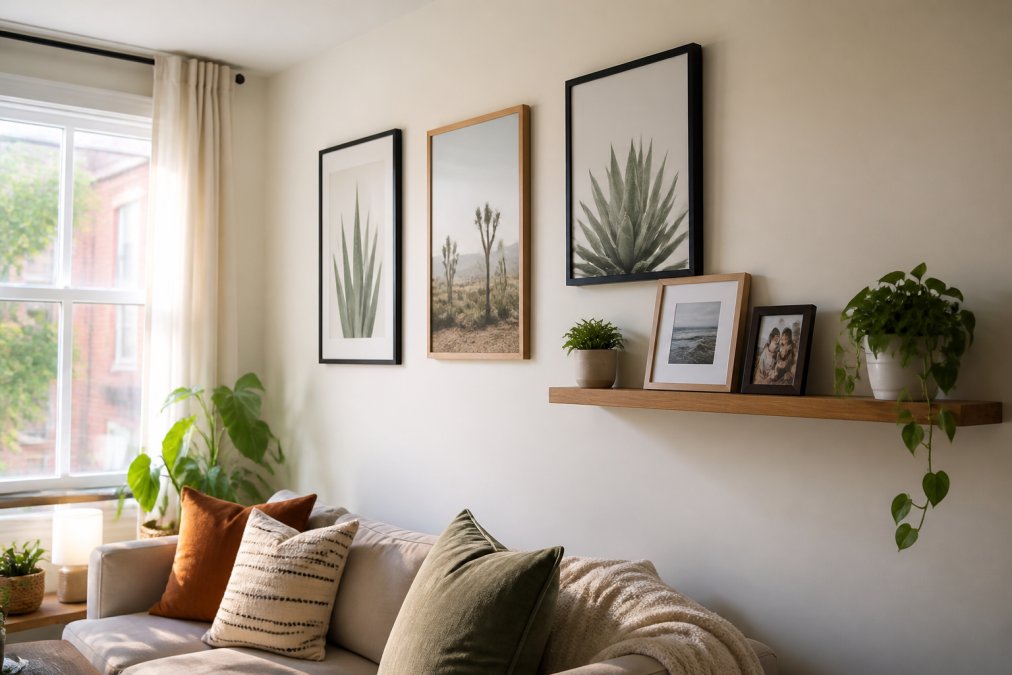
Command Hooks and Damage-Free Hanging Systems
Adhesive hooks and strips hold everything from frames to lightweight shelves and remove cleanly when you move. A common mistake is using the wrong weight rating, which causes items to fall and damages the wall. Always match the strip's weight capacity to your frame, and clean the wall with rubbing alcohol before applying.
DIY Wall Art and Picture Ledges
Picture ledges let you swap art without adding new holes. Install a ledge with adhesive strips, then lean frames, postcards, and small objects against the wall for a layered, gallery-style look you can change with the seasons. For a budget-friendly touch, print your own photography or frame fabric samples instead of buying expensive art.
2. Choose the Best Peel and Stick Wallpaper for Renters
The best peel and stick wallpaper for renters uses a self-adhesive backing that presses onto smooth walls and peels off without leaving sticky residue or pulling paint. It is a landlord-approved way to add pattern, color, and texture to a room.
Temporary Wallpaper for Accent Walls and Backsplashes
The most impactful use is a single accent wall behind your bed or sofa, which anchors the room without overwhelming it. In kitchens, peel-and-stick tile sheets create a convincing backsplash that protects the wall and wipes clean easily. Use a smooth squeegee to push out air bubbles and trim edges with a sharp utility knife.
3. Upgrade Lighting with Renter-Friendly Lighting Ideas
Harsh overhead lighting is a common complaint in rentals, but swapping fixtures is rarely allowed. Renter-friendly lighting ideas focus on plug-in solutions and smart technology that change the ambiance without rewiring.
Plug-In Sconces, Floor Lamps, and Smart Bulbs
Wall sconces that plug into outlets and mount with adhesive brackets add architectural interest without an electrician. Place them flanking a bed or beside a mirror for a polished look. Floor lamps in corners bounce light upward to make ceilings feel taller, while smart bulbs let you adjust color temperature from your phone to match the time of day. A guide from the Department of Energy notes that LED bulbs use at least 75% less energy than incandescent options, making them a budget-friendly and eco-friendly upgrade for any rental.
4. Layer Rugs to Cover Ugly Flooring
Rental carpets often show wear, and hardwood may have scratches you didn't cause. The quickest fix is layering rugs, which hides imperfections while adding texture and defining zones in open layouts. Start with a large, neutral base rug, then layer a smaller, patterned rug on top at an angle or centered.
This approach also protects the flooring underneath, strengthening your case for getting your full deposit back. In small spaces, rugs define separate areas like a dining zone or reading nook. Choose low-pile rugs for high-traffic areas since they are easier to vacuum and clean.
5. Swap Out Hardware and Window Treatments
Builder-grade cabinet pulls and plastic blinds are two of the fastest giveaways that you're renting. Swapping cabinet hardware is a simple, reversible upgrade that instantly modernizes a kitchen or bathroom. Keep the original hardware in a labeled bag and reinstall it before you move.
Window treatments do more than control light; they frame the room and add softness. Tension rods inside the window frame let you hang curtains without drilling. Choose floor-length curtains in a light, airy fabric to make the ceiling appear higher, and layer sheer panels under blackout curtains for flexibility.
6. Choose Modular and Multi-Functional Furniture
Furniture that serves one purpose is a luxury renters often can't afford. Modular and multi-functional pieces adapt to your needs and your future floor plan. A storage ottoman works as a coffee table, extra seating, and a place to hide blankets, while a fold-down desk creates a home office that disappears when guests arrive.
When selecting furniture for an apartment, prioritize pieces that are easy to disassemble and move. When selecting furniture for an apartment, prioritize pieces that are easy to disassemble and move.
7. Add Greenery with Vertical and Damage-Free Planters
Plants bring life to a sterile rental, but floor space is often limited. Vertical hanging planters turn bare walls into living art without a single nail. The Vertical Hanging Garden Flower Pots from Uniq Trenz use a waterproof backing that protects your walls while the eco-friendly felt pockets provide proper ventilation for roots. They are ideal for small homes, balconies, and kitchens, letting you grow herbs, succulents, or flowers in a space-saving vertical design.
8. Introduce Smart Home Elements That Move With You
Most smart home advice assumes you own your walls and can hardwire sensors, cameras, or switches. Renters face a different constraint: the lease. The unique angle here is rental-friendly smart home integration, building a connected, automated space using only devices that plug into existing outlets, stick to surfaces with removable adhesive, and travel with you to your next apartment.
The Core Principle: Wi-Fi and Plug-In, Not Hardwired
The foundation of a renter-friendly smart setup is a strong Wi-Fi network and a handful of devices that connect to it. Avoid anything that requires cutting into drywall, rewiring a switch, or replacing a fixture. Focus on these categories:
- Smart Plugs: These are the single most versatile tool for renters. A $15-$25 smart plug turns a regular lamp or fan into a voice-controlled or app-scheduled device. You can set a lamp to turn on at dusk, creating the illusion of occupancy while you're at work, then unplug it and take it with you when you move.
- Smart Bulbs: For fixtures you can't replace, a smart bulb (like a Philips Hue or Wyze bulb) is a direct swap. They allow you to adjust color temperature from a warm 2700K to a bright 5000K, all from your phone, changing a room's mood without a single permanent change (energy.gov).
- Smart Speakers and Displays: A smart speaker (like an Amazon Echo or Google Nest) is the central hub for voice commands. It can control your smart plugs and bulbs, play white noise to mask neighbor sounds, and act as a speaker for music.
- Adhesive-Mounted Sensors: For security and automation without drilling, look for door/window sensors that use strong, removable adhesive tape. These can trigger a smart plug to turn on a light when you come home or send an alert to your phone if a door opens while you're away.
The Trade-Off: Convenience vs. Complexity
The main trade-off with a plug-in smart home is that you are limited by the number of outlets and the visual clutter of adapters. A smart power strip, which gives you multiple controlled outlets in one unit, consolidates the plugs and keeps the setup tidy. The benefit is that your entire smart home is a collection of portable devices, not a permanent investment in the property.
A Practical, Budget-Conscious Starter Kit
For under $100, you can build a functional rental smart home setup: one smart speaker ($30-$50) as your voice hub, two smart plugs ($20-$30) for your living room lamp and bedroom fan, and one smart bulb ($15-$25) for a fixture you use most. This lets you automate your morning routine, create a 'goodnight' scene, and control it all from your phone.
9. Create a Cozy Ambiance with Projectors and Accent Lighting
Ambiance is what makes a house feel like a home. A star projector is a budget-friendly way to transform a ceiling into a calming cosmic display, perfect for winding down after a long day. The Northern Lights Star Projector from Uniq Trenz offers 48 lighting modes, a built-in Bluetooth speaker, and a remote control, creating a personalized atmosphere that elevates any bedroom or living space.
10. Maximize Storage with Space-Saving Solutions
While aesthetics are important, the most common pain point for renters is a lack of functional storage, especially in small, builder-grade closets. This section focuses on non-permanent, high-density storage solutions for the two most problematic areas: the bedroom closet and the kitchen.
The Rental Closet: A Problem of Vertical Space
A standard rental closet is often a single rod and a shelf, wasting the upper half of the space. The goal is to double or triple your usable storage without installing a custom closet system, building a modular system from the floor up that doesn't require tools or wall anchors.
- The Rolling Garment Rack: Instead of fighting the single rod, add a second, freestanding rolling rack next to it for a second hanging level. It's a piece of furniture you can move to another room or take with you. A sturdy, chrome or steel rack costs between $30 and $60 and can hold hundreds of pounds of clothing.
- Modular Cube Storage: A freestanding, modular cube shelf (like the IKEA Kallax or similar) fits inside a large closet or sits against the wall outside it. The cubes can hold folded sweaters, shoes, or clear plastic bins. Use fabric or plastic bins to keep items dust-free and create a uniform, tidy look.
- Over-the-Door Organizers: The back of the closet door is prime, unused real estate. A clear, over-the-door shoe organizer can hold scarves, belts, cleaning supplies, or toiletries. For deeper storage, an over-the-door metal rack with wire baskets can hold heavier items. These organizers hang from the top of the door and require no screws.
- The 'Double-Hang' Trick: For closets with a single high rod, use a 'hanging rod extender' or a simple chain and S-hooks to create a second, lower rod. This instantly doubles your hanging space for shirts and pants.
Kitchen and Bathroom: Slim and Rolling Solutions
Kitchens and bathrooms in rentals are notorious for having too few cabinets. The solution is to use the space between the counter and the floor or the back of the door.
- Slim Rolling Carts: A 3-tier, slim rolling cart (about 6-8 inches wide) can fit in the gap between your refrigerator and the counter or next to a bathroom vanity. Use it for canned goods, spices, or extra toiletries. It's mobile and requires no installation.
- Under-Sink Tension Rods: A spring-loaded tension rod can be installed horizontally under the sink to hang spray bottles, creating a second shelf level and utilizing otherwise dead space.
- Over-the-Cabinet Door Racks: For kitchen cabinets, a small over-the-door wire rack can hold cleaning supplies or plastic wrap and foil. In the bathroom, a similar rack on the inside of the vanity door can hold hair tools or extra toilet paper.
The Utility of a 'First-Night' Box
A practical, non-aesthetic tip that adds immense utility is to pack a 'first-night' box when you move. This box contains the essentials you'll need immediately: a roll of toilet paper, a towel, a basic toolkit, a lamp, and a power strip. This prevents you from frantically unpacking everything on day one and allows you to set up your storage systems methodically.
Frequently Asked Questions
How can I decorate my rental without losing my security deposit?
Focus on temporary, damage-free solutions. Use command hooks instead of nails, choose peel-and-stick wallpaper that removes cleanly, and avoid painting walls without written permission. Keep all original hardware and store it safely so you can swap it back before moving out. Document the apartment's condition with photos when you move in. This approach lets you apply budget-friendly home decor ideas while protecting your deposit.
What is the best peel and stick wallpaper for renters?
Look for removable, repositionable wallpaper from brands that advertise clean removal without residue. Before committing, test a small piece in an inconspicuous area for 48 hours. Textured or grasscloth styles hide wall imperfections better than high-gloss finishes. For kitchens and bathrooms, choose a waterproof vinyl option. Apply it to a smooth, clean surface and use a smoothing tool to avoid bubbles. This gives you the look of wallpaper without permanent changes.
What are the most effective renter-friendly lighting ideas?
Plug-in wall sconces add ambiance without rewiring. Floor lamps with dimmable smart bulbs let you adjust the mood. Battery-operated LED puck lights work well under cabinets or inside closets. Consider a star projector for a dramatic accent ceiling effect without any installation. Layering these light sources creates warmth and depth, making a small rental feel more polished and spacious.
How do I make a small rental apartment look expensive on a budget?
Focus on a cohesive color palette and add texture through budget-friendly items like throw blankets, rugs, and curtains. Hang curtains high above the window frame to make ceilings look taller. Use a large mirror to reflect light and visually expand the room. Swap out basic light switch plates and cabinet hardware for modern finishes. These low-cost changes create a custom, high-end feel without major renovations.
Can I change the flooring in a rental apartment?
Permanent flooring changes require landlord approval, but temporary options exist. Large, removable area rugs are the safest way to cover damaged or dated floors. Peel-and-stick vinyl tile planks offer a more complete transformation and remove cleanly when applied correctly, but check your lease first. For bathrooms and kitchens, interlocking foam or vinyl tiles provide a waterproof, temporary surface. Always confirm removal instructions before installation.