

Organize Kitchen Cabinets Without Drilling: 7 Renter-Friendly Methods
Table of Contents
- Why No-Drill Organization Works for Your Kitchen
- Adhesive Cabinet Organizers: Installation and Best Practices
- Tension Rod Kitchen Hacks for Maximum Vertical Storage
- Pull-Out Shelves and Under-Shelf Baskets Without Permanent Fixtures
- Renter-Friendly Kitchen Organization: Space Optimization for Apartments
- Weight Capacity and Surface Safety: What You Need to Know
- Clear Bins, Shelf Liners, and Container Systems That Work
- Conclusion
Last Updated: August 29, 2026
Why No-Drill Organization Works for Your Kitchen
Kitchen cabinets don't need permanent damage to become perfectly organized. No-drill solutions offer damage-free alternatives that maintain your security deposit while delivering clean, functional results. The real advantage is flexibility: adhesive hooks, tension rods, and pull-out shelves can be repositioned or removed without leaving a trace. For renters, this means optimizing cabinet space without landlord approval or repair costs. Even homeowners appreciate reconfiguring storage as needs shift.
Uniq Trenz offers practical solutions designed for renters and space-conscious homeowners. Our curated selection includes shelf organizers, clear container systems, and space-saving tools that transform cluttered cabinets into simplified storage zones. No special skills, tools, or permanent modifications required.
Adhesive Cabinet Organizers: Installation and Best Practices
Adhesive hooks and organizers represent the simplest entry point into renter-friendly kitchen organization. These damage-free solutions attach directly to cabinet surfaces using strong adhesive backing, creating instant hanging space without drilling.
Installation requires minimal preparation. Clean the cabinet surface thoroughly with a dry cloth to remove dust and grease, this directly impacts adhesive bonding. Most adhesive organizers perform best on smooth, flat surfaces like painted wood or laminate. Press firmly for 30 seconds after placement, then wait the recommended time (usually 24 hours) before hanging items.
Weight capacity matters significantly. Standard adhesive hooks typically hold 2-5 pounds per hook, depending on quality and surface type. Heavier items like cast iron cookware exceed these limits and risk pulling the hook loose. Lightweight items like plastic bags, kitchen linens, or small jars work perfectly.
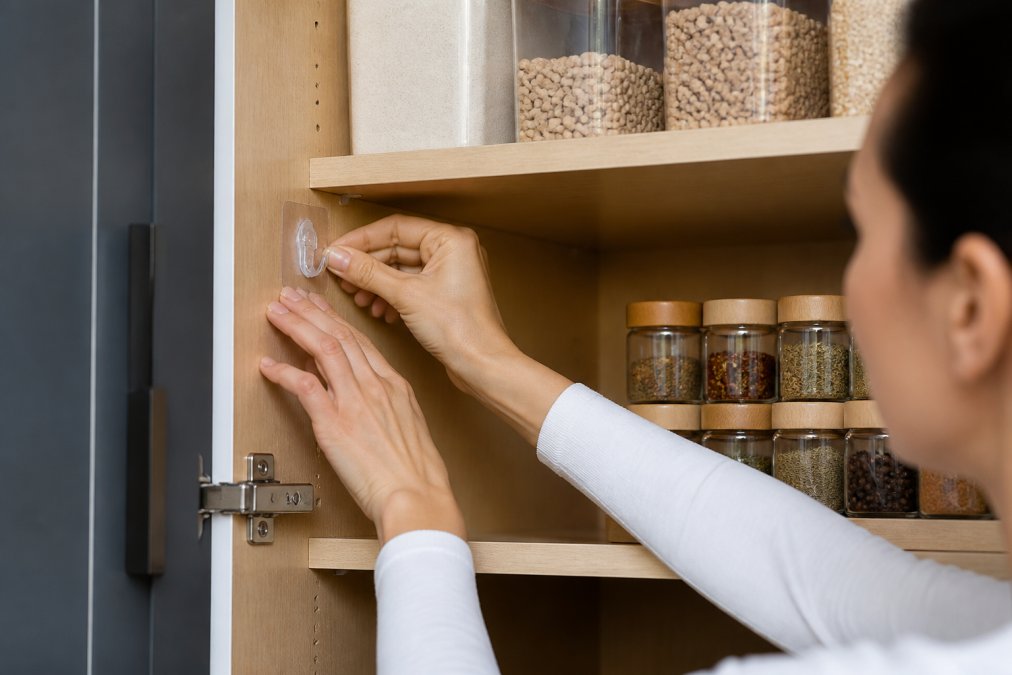
Surface compatibility determines success or failure. Painted wood cabinets respond well to adhesive solutions. Laminate surfaces work reliably. Textured or unfinished wood, stainless steel, or plastic-coated materials often reject adhesive backing. Test a small area first, or opt for tension rods if adhesive seems risky on your specific cabinet material.
The Shelf Kitchen Organizer from Uniq Trenz ($26.99) provides adjustable shelving that works alongside adhesive solutions, creating additional vertical storage without permanent installation. Removal is straightforward when you need to reposition or leave your space. Adhesive hooks typically peel away cleanly if removed slowly and at a low angle. Rubbing alcohol dissolves any residual adhesive residue within seconds.
Tension Rod Kitchen Hacks for Maximum Vertical Storage
Tension rods transform wasted vertical space inside cabinets into functional storage for cutting boards, baking sheets, and flat items. These spring-loaded rods fit between cabinet walls without drilling or permanent installation, making them ideal for renter-friendly organization.
Installing a tension rod takes less than two minutes. Measure the distance between your cabinet walls, select a rod slightly shorter than that measurement, and twist the rod to extend it until it fits snugly. Positioning matters: place rods roughly 2-3 inches apart to accommodate items of varying thickness.
Most tension rods handle 10-15 pounds distributed across the rod's length (the CDC). Lighter items like thin cutting boards and sheet pans work perfectly. Heavier items like cast iron skillets exceed this capacity and risk the rod slipping. The rod's strength depends on cabinet frame rigidity; solid wood cabinets provide better support than particleboard units.
Tension rods excel at organizing by frequency of use. Mount rods at eye level for daily-access items, higher up for seasonal supplies, and lower for less-frequently used items. Multiple rods in a single cabinet create a filing-system effect for flat items, making each instantly visible and accessible.
Tension rods work best in cabinets with smooth, painted interiors. Rough textures or protruding hardware can prevent even tension and cause slipping. If your cabinet interior is unfinished wood, lightly sand the contact points or use adhesive-backed shelf liners to create a smoother surface.
Pull-Out Shelves and Under-Shelf Baskets Without Permanent Fixtures
Pull-out shelves and under-shelf baskets maximize cabinet depth and improve accessibility without drilling into cabinet frames.
Under-shelf baskets attach to existing shelves using adhesive strips or lightweight clamps. These baskets hang below your current shelves, creating additional storage for canned goods, pasta, or small appliances. Installation takes minutes: measure the shelf width, position the basket, and secure it according to product instructions.
Weight distribution becomes critical with under-shelf baskets. The basket's weight plus contents transfers entirely to the shelf above. Most standard cabinet shelves support 25-50 pounds, but particleboard shelves may flex under load. Distribute weight evenly and avoid overloading a single basket.
Pull-out shelf inserts fit inside existing cabinets without modification. These slide-out trays increase accessibility by bringing items stored at the back of deep cabinets forward. Installation typically involves setting the insert on the existing shelf with no adhesive or fasteners required.
Cabinet depth optimization is where pull-out solutions shine. Standard kitchen cabinets often measure 12-14 inches deep, with much of that depth wasted because items stored in the back become inaccessible (nkba.org). A pull-out shelf brings everything forward, effectively doubling your usable storage space.
Accessibility improvements matter especially for aging-in-place considerations. Pull-out shelves eliminate reaching and bending, making kitchen storage safer and more functional for everyone in the household.
Renter-Friendly Kitchen Organization: Space Optimization for Apartments
Apartment kitchens demand creative thinking because cabinet space is typically limited and drilling is off-limits. The strategy shifts from adding storage to maximizing every inch of existing space through smart organization.
Vertical storage becomes your primary tool. The space between cabinet shelves is often underutilized. Shelf dividers, adhesive hooks, and tension rods all work vertically to create multiple storage zones within a single cabinet. A cabinet that once held 8-10 items can hold 15-20 with vertical organization.
Zone your cabinets by function and frequency. Dedicate one cabinet to everyday dishes and glassware (eye level), another to cooking tools (near the stove), and a third to pantry staples (lower cabinets for heavier items). This zoning approach reduces search time and makes cooking more efficient.
Under-cabinet space offers surprising potential. The area below wall cabinets and above your counter becomes valuable real estate for magnetic spice racks, adhesive hooks, or hanging baskets. Wall-mounted solutions like the Wall-Mounted Kitchen Multi-Grain Sealed Jars from Uniq Trenz ($33.99) use this often-ignored space while keeping frequently used items within arm's reach.
Stackable containers and clear bins transform cabinet interiors. Instead of loose items scattered across shelves, stackable containers create defined storage zones. Clear bins let you see contents without opening every container. Label containers by category and stack them efficiently to maximize vertical space.
Renter-specific solutions avoid permanent changes. Adhesive shelf liners protect cabinet surfaces while creating a cleaner appearance. Tension rods, under-shelf baskets, and pull-out inserts all come out cleanly when you move.
Weight Capacity and Surface Safety: What You Need to Know
Understanding weight limits prevents accidents and product failure. Every no-drill organizing solution has a maximum weight capacity.
Adhesive solutions vary dramatically in strength. Standard command hooks hold 2-5 pounds. Heavy-duty adhesive hooks rated for cabinet use hold 10-15 pounds. Check product specifications before purchase.
Surface type determines actual holding strength. A 10-pound adhesive hook might hold 10 pounds on smooth painted wood but only 5 pounds on textured laminate. Test adhesive solutions on inconspicuous areas first, or choose mechanical alternatives if surface compatibility seems questionable.
Cabinet frame construction affects load-bearing capacity. Solid wood cabinets support heavier loads than particleboard units. A solid wood cabinet might safely support 50 pounds on a shelf, while the same shelf in particleboard construction might support only 25 pounds.
Tension rods require adequate cabinet width to function properly. Over-extending a tension rod to fit a wider cabinet creates excessive tension that can bend or break the rod. Follow manufacturer guidelines for maximum width and load capacity.
Pull-out shelves and under-shelf baskets distribute weight differently than traditional shelves. Calculate total weight, basket plus contents plus existing shelf contents, before installation.
Surface protection matters for long-term cabinet health. Adhesive hooks can damage painted finishes if removed carelessly. Tension rods can scratch cabinet interiors if not properly padded. Shelf liners protect cabinet surfaces from moisture, spills, and staining.
Clear Bins, Shelf Liners, and Container Systems That Work
Clear containers represent the foundation of modern cabinet organization. Unlike opaque boxes, clear bins let you see contents at a glance, reducing search time and preventing duplicate purchases.
Stackable clear containers maximize vertical space. Standard rectangular containers nest efficiently, allowing you to build storage towers within cabinet spaces. Different container sizes work together: large containers for bulk items, smaller containers for specialty ingredients.
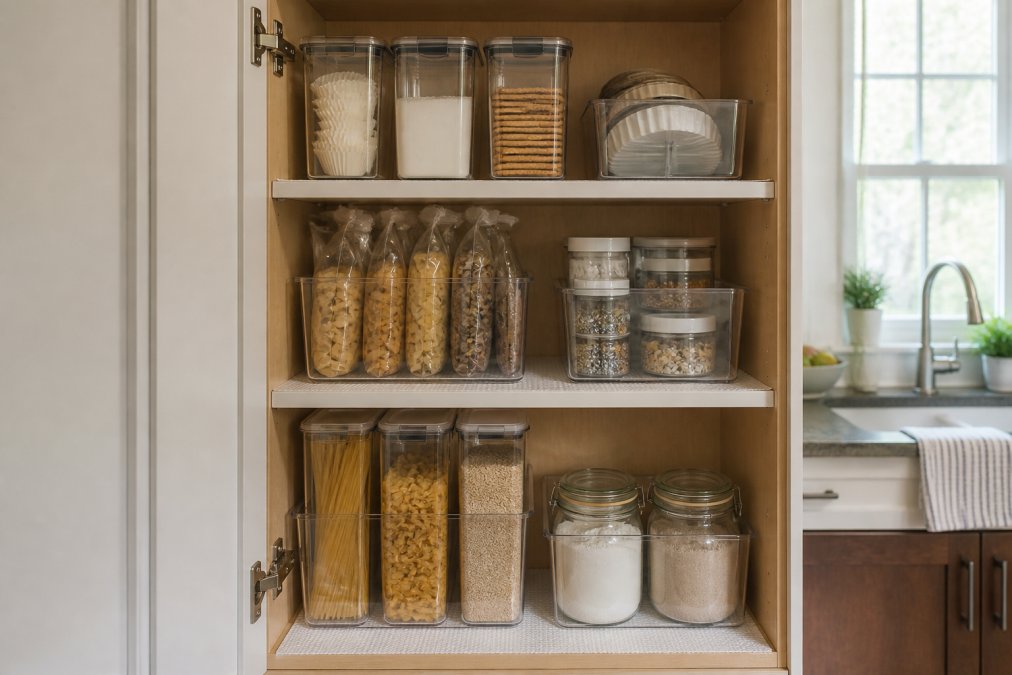
Material durability affects long-term performance. BPA-free plastic containers resist cracking and discoloration better than cheaper alternatives. Glass containers cost more but last indefinitely and resist odor absorption.
Labeling transforms containers from functional to efficient. Adhesive labels on container fronts or lids identify contents instantly. Include purchase dates for perishable items, helping prevent food waste. Color-coded labels by category speed up finding items during cooking.
Shelf liners protect cabinet surfaces from spills, moisture, and staining. These adhesive-backed liners come in various materials and are easily replaced when worn. Liners also prevent containers from sliding during cabinet access.
Airtight containers extend shelf life for pantry staples. Dry goods like flour, sugar, and cereals stay fresher longer in sealed containers. This preservation benefit reduces food waste and prevents pest access.
Organization by category creates a mental map of your cabinet system. Dedicate specific containers to baking supplies, breakfast items, snacks, and specialty ingredients. This consistency means you know exactly where to look for items.
Container sizing matters for space efficiency. Containers that perfectly fit your cabinet dimensions waste no space. Measure your cabinet interior dimensions before purchasing containers, accounting for any existing shelf dividers.
Conclusion
Organizing kitchen cabinets without drilling is entirely achievable with the right approach and tools. Adhesive hooks, tension rods, pull-out shelves, and clear container systems work together to create functional, organized spaces that rival any permanently modified cabinet setup.
The beauty of no-drill organization lies in its flexibility and reversibility. Renters can organize confidently without security deposit concerns. Homeowners can reconfigure storage as needs change. Everyone benefits from faster meal preparation, reduced food waste, and the satisfaction of opening a cabinet and finding exactly what you need.
Uniq Trenz offers everything you need to implement these strategies. Our Shelf Kitchen Organizer and Wall-Mounted Kitchen Multi-Grain Sealed Jars combine smart design with damage-free installation, making cabinet transformation straightforward and stress-free. Start with one cabinet, master the techniques, then expand your system throughout your kitchen. Transform your storage today, START SHOPPING with Uniq Trenz and discover how simple, effective organization can be.
Frequently Asked Questions
Can you add shelves to kitchen cabinets without drilling?
Yes. Pull-out shelves, tension rods, and adhesive-mounted shelf dividers let you add storage layers without drilling holes. Pull-out shelves rest on existing cabinet frames and slide out for easy access. Tension rods fit vertically between shelves to create dividers. These solutions work best when load is distributed evenly and weight stays within manufacturer limits, typically 15-25 pounds per shelf depending on the product.
What are the best adhesive storage solutions for kitchen cabinets?
Adhesive hooks, magnetic spice racks, and door-mounted organizers offer damage-free installation. Command hooks and adhesive strips rated for kitchen use work on clean, dry cabinet surfaces and handle light to moderate weight (check product specs, most hold 3-7 pounds). For heavier items, adhesive-backed shelf liners and non-slip mats provide grip without permanent installation. Always test on a small area first and allow adhesive to cure fully before loading.
How do I maximize vertical space in cabinets without permanent fixtures?
Stack clear bins and stackable containers to use full cabinet height. Install tension rods horizontally between shelves to hang lightweight items or create zones. Use over-the-door organizers on cabinet doors for spices, oils, and small tools. Under-shelf baskets slide onto existing shelves to add storage below without drilling. This approach transforms wasted vertical space into functional zones organized by frequency of use and item type.
What should I know about weight capacity and surface compatibility?
Most adhesive organizers hold 3-15 pounds depending on the product and cabinet surface. Laminate and painted wood accept adhesive better than glossy or oily finishes. Check your cabinet's load-bearing capacity, standard cabinets handle 50-100 pounds per shelf. Test weight distribution by placing heavier items toward the cabinet frame. Avoid overloading adhesive solutions; use shelf dividers and smaller containers to spread weight evenly and prevent damage to cabinet surfaces.
This article was written using GrandRanker