

Renter-Friendly Kitchen Cabinet Organization Ideas
Table of Contents
- Why Renters Need Different Cabinet Organization Strategies
- No-Drill Kitchen Storage Solutions That Protect Your Lease
- Maximizing Vertical Space in Rental Kitchens
- Best Cabinet Organizers for Renters
- Apartment Kitchen Organization Hacks for Small Spaces
- Budget-Friendly vs. Aesthetic-Focused Organization
- Cleaning and Maintenance of Rental Organizers
- Conclusion
Last Updated: August 21, 2026
Why Renters Need Different Cabinet Organization Strategies
Renter-friendly kitchen cabinet organization ideas require a fundamentally different approach than permanent home solutions. When you don't own the space, drilling holes, installing shelves, or making structural changes isn't an option, and violating your lease can cost you your security deposit or trigger costly repairs. The challenge is finding storage that leaves zero trace when you move.
At Uniq Trenz, we understand that renters face unique constraints. You need solutions that maximize space without permanent damage, work in kitchens of any size, and pack down when relocating. The right no-drill storage solutions can transform a cramped rental kitchen into a functional space that protects your lease.
No-Drill Kitchen Storage Solutions That Protect Your Lease
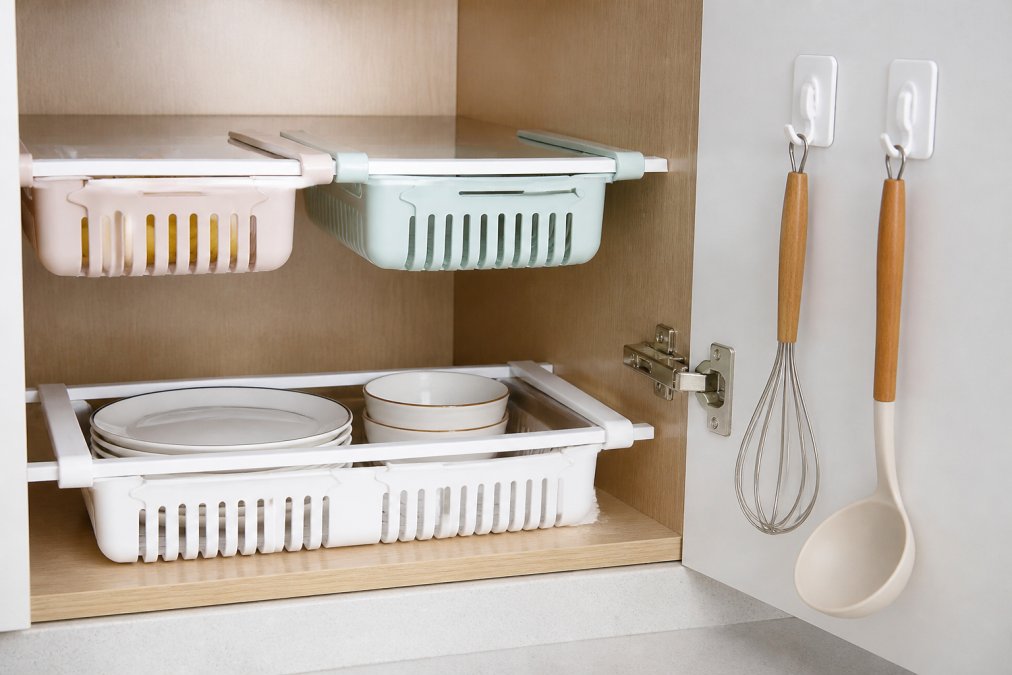
Damage-free mounting is the cornerstone of renter-friendly kitchen cabinet organization ideas. These methods use adhesive, tension, or friction to secure organizers without drilling, nailing, or leaving permanent marks.
Adhesive Hooks and Damage-Free Mounting
Adhesive hooks are the workhorse of renter-friendly organization. Unlike traditional hooks that require drilling, adhesive hooks use industrial-grade adhesive to bond directly to cabinet surfaces. They're lightweight, removable, and leave minimal residue when removed properly.
Command-style hooks designed for cabinet interiors typically hold 3-5 pounds, sufficient for utensil organizers, dish towels, and lightweight kitchen tools. Installation takes 30 seconds: clean the surface, apply the hook, and wait the recommended cure time (usually 24 hours) before hanging items.
When removing adhesive hooks, pull slowly at a 180-degree angle straight out from the surface rather than yanking downward (3m.com). This minimizes residue. If residue remains, rubbing alcohol removes it without damaging cabinet finishes. For heavier items, adhesive strips rated for 10+ pounds work on the same principle with stronger formulations, ideal for organizing cabinet door interiors.
Tension Rods for Cabinet Dividers
Tension rods work equally well inside cabinets as dividers, holding items through spring tension with no drilling required. Install them horizontally to separate dishes by type: dinner plates in one section, bowls in another. This prevents stacking and improves access. Vertical tension rods organize baking sheets, cutting boards, or serving trays by standing them upright.
Most rods extend from 20 to 40 inches and adjust to fit your cabinet width precisely. When you move, they remove in seconds with no residue or damage. They cost $8-15 each, making them one of the most affordable cabinet dividers available. Position rods as far back in the cabinet as possible and tighten firmly for maximum stability.
Maximizing Vertical Space in Rental Kitchens
Vertical storage transforms cramped rental kitchens by using wall and cabinet height instead of floor or counter space. This approach is especially critical in apartments where square footage is limited.
Shelf Risers and Stackable Storage
Shelf risers are simple plastic or metal frames that sit on existing cabinet shelves and create a second level above them. They're freestanding, require no fasteners, and typically cost $15-30. A single riser can double your usable shelf space by allowing vertical stacking.
Choose risers with adjustable height settings (usually 6-12 inches) so you can customize them to your cabinet dimensions. Metal risers with open sides work better than solid ones because they don't block light and make items easier to see. Place risers toward the back of shelves to maintain access to frequently used items.
Stackable bins complement risers perfectly. Clear plastic bins let you see contents at a glance. Measure your cabinet width and depth before buying bins. Stackable bins from Uniq Trenz's Shelf Kitchen Organizer ($26.99) offer adjustable compartments that adapt to your storage needs, whether organizing spices, small appliances, or pantry items.
Over-the-Door Organizers
Over-the-door organizers hang on the inside of cabinet doors using hooks or adhesive strips. They're invisible when the door closes but provide substantial storage when opened. Clear vinyl pockets hold spices, tea bags, or small packets, while wire baskets accommodate larger items like aluminum foil, plastic wrap, or cleaning supplies.
Weight capacity is critical; most over-the-door organizers hold 5-10 pounds safely. Overloading causes the door to sag or the organizer to pull away. Adhesive-backed models stick directly to cabinet interiors for a cleaner look, while hook-based versions hang over the door edge and work on any cabinet door. One over-the-door organizer per cabinet can add usable storage without taking up interior space.
Best Cabinet Organizers for Renters
The most effective cabinet organizers for renters combine damage-free installation with flexible, modular design that adapts to different cabinet sizes without permanent modifications.
Freestanding Utility Carts and Modular Units
Freestanding utility carts are mobile storage units on wheels that can be rolled into cabinets, corners, or between appliances. They require zero installation, leave no damage, and move with you when relocating. A typical 3-tier cart measures 24-30 inches wide and 12-15 inches deep, fitting inside most cabinet openings or narrow kitchen gaps (amazon.com). Use tiers for daily-use items, backup supplies, and bulky items like mixing bowls or small appliances. Wheels lock to prevent shifting.
Modular storage units work similarly but without wheels, offering stackable plastic or metal frames arranged inside cabinets to create custom configurations. They don't take up floor space and cost less than utility carts ($20-40 versus $60-100). When selecting either option, measure your cabinet opening and doorway to ensure the unit fits through your kitchen. Check weight capacity carefully; overloading compromises wheel function and creates safety hazards.
Drawer Inserts and Under-Cabinet Organization
Drawer inserts create compartments within existing drawers, preventing utensils and small items from sliding around. They're freestanding and cost $10-25. Bamboo or plastic inserts work equally well; choose based on aesthetic preference.
Under-cabinet organization typically refers to storage hanging beneath existing cabinet shelves. Adhesive-mounted baskets or magnetic strips hold items like spice jars without using valuable shelf space. Tension rods mounted horizontally under shelves create hanging space for dish towels or small organizers. For renters, adhesive-mounted solutions are preferable to screw-mounted ones. A set of two adhesive under-cabinet baskets costs $15-20 and holds 10-15 pounds.
Apartment Kitchen Organization Hacks for Small Spaces
Small rental kitchens demand creative thinking. The most effective apartment kitchen organization hacks prioritize density, fitting maximum storage into minimum footprint.
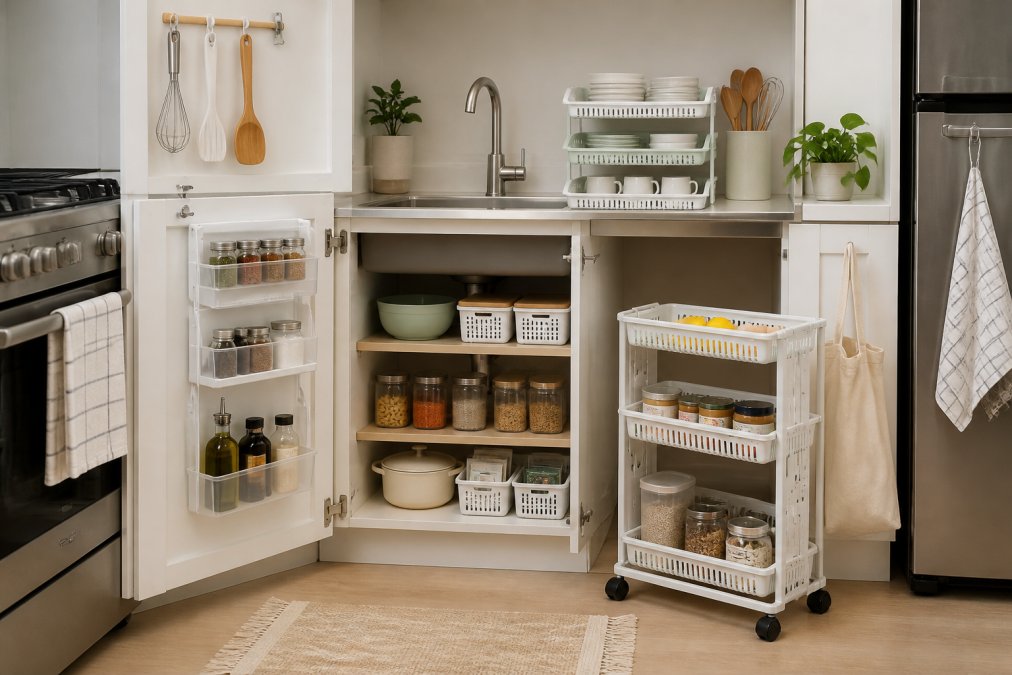
Start by auditing what you actually use daily versus what you store "just in case." In small kitchens, every item needs to earn its space. Items used weekly should be in primary cabinets at eye level. Items used monthly can go higher or deeper. Use vertical space aggressively with adhesive hooks, tension rods, and shelf risers.
Group similar items together and use clear containers so you can see what you have at a glance. This prevents duplicate purchases and helps identify what's missing. Clear stackable bins from Uniq Trenz offer visibility and adjustable compartments. Consider whether items belong in cabinets at all; wall-mounted magnetic strips, small open shelves, or rolling carts for pantry staples free up cabinet space for items that need to be out of sight.
Budget-Friendly vs. Aesthetic-Focused Organization
Budget-friendly organization prioritizes function over appearance. Clear plastic bins, basic tension rods, and simple wire baskets cost $5-15 each. A complete budget-friendly setup costs $75-150 but may look utilitarian.
Aesthetic-focused organization invests in matching sets and attractive materials. Bamboo drawer inserts and woven baskets cost $20-50 per item but create a cohesive look. A complete aesthetic setup might cost $200-400.
The hybrid approach works best for renters. Invest in one or two aesthetic pieces that are visible, like attractive over-the-door organizers or a nice utility cart, and use budget-friendly solutions for hidden storage. Consider your timeline; if staying 2-3 years, nicer organizers make sense. If moving within a year, budget-friendly solutions are smarter.
Cleaning and Maintenance of Rental Organizers
Damage-free organizers require different maintenance than permanent installations. Inspect adhesive hooks monthly by gently pressing to verify they're still bonded securely. If any feel loose, remove and replace them immediately.
Clean tension rods every 3-4 months. Dust accumulates on metal and the spring mechanism can weaken. Wipe rods with a dry cloth and check that they're still tightened firmly. For freestanding carts and modular units, vacuum underneath weekly to prevent debris buildup. Check wheel locks regularly and wipe surfaces monthly with a damp cloth.
When preparing to move, remove organizers in reverse order of installation. Remove adhesive hooks slowly using the 180-degree pull technique. Clean any residual adhesive with rubbing alcohol. Take photos of your original cabinet configuration.
Renter-friendly kitchen cabinet organization ideas don't require expensive renovations or permanent installations. Simple, damage-free solutions like tension rods, adhesive hooks, shelf risers, and freestanding carts can transform a cluttered rental kitchen into an organized, functional space while protecting your security deposit.
Uniq Trenz carries several products that work perfectly for rental kitchen organization. The Shelf Kitchen Organizer ($26.99) provides adjustable shelving that maximizes cabinet space, while the Wall-Mounted Kitchen Multi-Grain Sealed Jars ($33.99) offer space-saving vertical storage for pantry items. Both solutions are damage-free and move with you when you relocate. START SHOPPING to explore our full range of space-saving kitchen organizers designed for renters and apartment dwellers.
Frequently Asked Questions
What are the best renter-friendly ways to add storage to a kitchen without drilling?
Tension rods, adhesive hooks, over-the-door organizers, and freestanding utility carts are your safest bets. These solutions require zero permanent installation and leave no damage. Shelf risers and stackable bins maximize existing cabinet space without modifications. Our Shelf Kitchen Organizer ($26.99) is designed specifically for renters, offering adjustable shelves that fit inside cabinets and work on countertops without any drilling or mounting required.
How can I maximize vertical space in rental kitchen cabinets?
Use shelf risers to double your storage capacity by creating two levels where one existed. Stack items vertically with drawer dividers and stackable bins. Install tension rods horizontally to create shelf dividers that prevent stacks from toppling. Over-the-door organizers add instant vertical storage on cabinet doors. The Wall-Mounted Kitchen Multi-Grain Sealed Jars ($33.99) use wall space efficiently for pantry items, keeping countertops clear while maintaining easy access.
Are tension rods effective for organizing kitchen cabinets?
Yes, tension rods are highly effective and renter-friendly. They create instant dividers inside cabinets, preventing plates, baking sheets, and cutting boards from sliding around. They adjust to fit most cabinet widths and require zero tools or damage. Position them vertically to separate different item types or horizontally to create shelf dividers. This simple solution costs just a few dollars and works immediately without installation.
How do I protect my rental kitchen cabinets while organizing them?
Stick to damage-free methods: adhesive hooks, tension rods, removable shelf liners, and freestanding organizers. Avoid drilling, nailing, or permanent adhesives. Use felt pads under organizers to prevent scratches. Keep cabinet interiors clean with regular wiping to prevent staining. Document the cabinet condition with photos before organizing. When you move out, remove all organizers and clean thoroughly. This approach ensures you'll get your full security deposit back while maintaining a well-organized kitchen.
This article was written using GrandRanker