

8 Modern Living Room Furniture Trends for 2026
Table of Contents
- 8 Living Room Furniture Trends Defining 2026
- Trend 1: Curved Sofas and Soft Silhouettes
- Trend 2: Earthy Color Palettes and Warm Neutrals
- Trend 3: Sustainable Furniture Materials for 2026
- Trend 4: Modular Sectionals for Flexible Living
- Trend 5: How to Mix Vintage and Modern Furniture
- Trend 6: Biophilic Design and Natural Elements
- Trend 7: Small Space Furniture Solutions
- Trend 8: Statement Lighting and Ambient Accents
- How to Start With These Trends Today
- Frequently Asked Questions
Last Updated: September 5, 2026
8 Living Room Furniture Trends Defining 2026
The living room furniture trends for 2026 are shifting away from stark minimalism toward warm, tactile, and deeply personal spaces. Homeowners are prioritizing comfort-driven silhouettes, earthy color palettes, and sustainable materials that age gracefully rather than follow fleeting fads. This guide from Uniq Trenz breaks down the eight defining living room furniture trends for 2026, showing you exactly how to adapt each one to your space, your budget, and your existing decor.
TL;DR:
- Curved sofas and soft silhouettes are the single biggest shape shift in seating
- Earthy palettes and warm neutrals replace cool grays as the default backdrop
- Sustainable materials 2026 focuses on natural wood, organic textiles, and recycled content
- Modular sectionals win for flexibility but require honest spatial planning
- Biophilic design moves beyond plants to texture, light, and organic shapes
- Small space furniture solutions prioritize dual-purpose pieces with hidden storage
These eight modern living room furniture trends 2026 are not about a total redesign. Most can be layered into what you already own, one piece at a time.
Trend 1: Curved Sofas and Soft Silhouettes
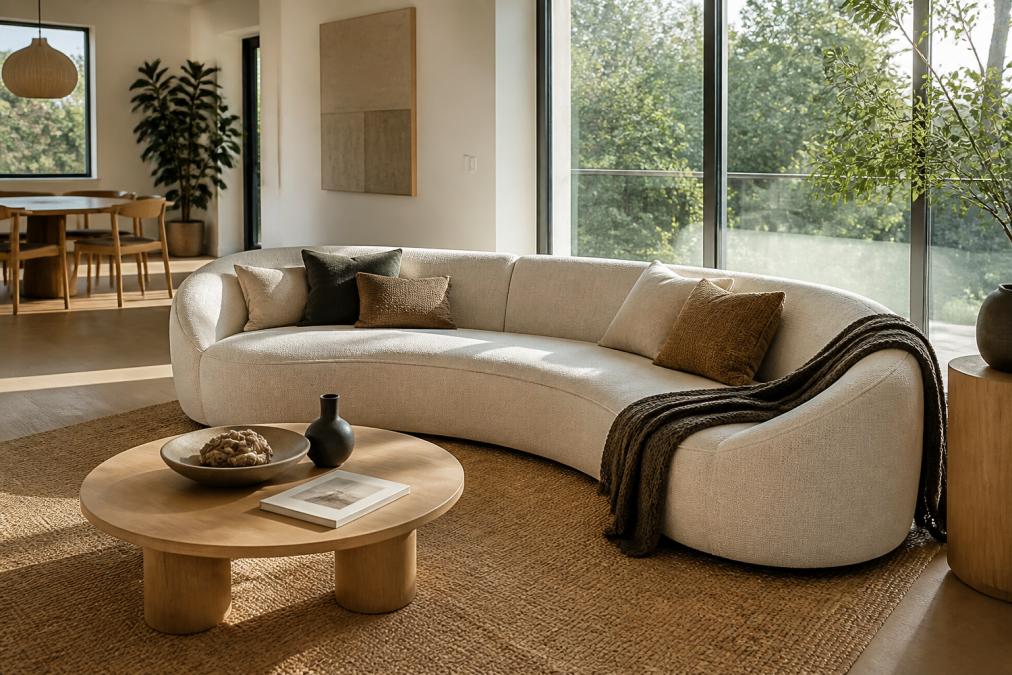
Curved sofas are the defining silhouette of 2026 living room design, replacing the sharp, angular lines that dominated the past decade. These pieces feature rounded backs, deep seating proportions, and plush upholstery that invite lounging rather than formal sitting. The appeal is both visual and practical: curves soften the flow of a room and create natural conversation zones without requiring additional furniture.
The trend extends beyond sofas. Curved silhouettes appear in armchairs, ottomans, and even shelving units. Designers are pairing these rounded forms with organic shapes in coffee tables and side tables to create a cohesive, welcoming environment.
For a budget-friendly entry point, consider curved accent chairs or a rounded ottoman rather than replacing your entire sofa. These smaller pieces deliver the same visual softening at a fraction of the cost.
Trend 2: Earthy Color Palettes and Warm Neutrals
Earthy color palettes and warm neutrals have officially replaced cool grays as the foundation of modern living room design. Think terracotta, olive, sand, clay, and warm taupe rather than the blue-gray and greige tones of previous years. These colors create a grounded, calming atmosphere that pairs naturally with the organic materials gaining popularity across furniture categories (peer-reviewed research).
Warm minimalism is the philosophy driving this shift: fewer pieces, richer tones, and a focus on how each element feels rather than just how it looks. Color drenching, painting walls and trim in the same earthy tone, is a popular technique for making small spaces feel larger and more cohesive. Monochromatic schemes in warm browns or muted greens add depth through textural contrast rather than color variation.
Trend 3: Sustainable Furniture Materials for 2026
Sustainable furniture materials 2026 is no longer a niche concern; it is a primary purchasing driver for many homeowners. The focus is on materials that are renewable, recycled, or built to last decades rather than seasons. Aged woods with visible grain, responsibly sourced timber elements, and organic textiles like linen, hemp, and wool are leading the category.
Recycled and upcycled materials are also gaining ground. Furniture made from reclaimed wood, recycled metal, and post-consumer plastics offers the durability of traditional pieces with a fraction of the environmental footprint. The "built to last" philosophy behind sustainable furniture directly addresses the frustration of fast-furniture that falls apart within a few years.
When shopping, look for pieces with visible joinery, solid wood rather than veneer over particleboard, and upholstery fabrics that are tightly woven and stain-resistant. These details signal longevity, which is the most sustainable choice you can make. For smaller accents, the EPA's guidelines on sustainable materials management emphasize reducing waste through durable, repairable goods.
Trend 4: Modular Sectionals for Flexible Living
Modular sectionals answer a question many homeowners are asking: how do I make one living space work for movie nights, remote work, and casual entertaining? These systems consist of individual seating units that can be rearranged, expanded, or reduced to fit changing needs. A modular sectional might work as a spacious L-shape for a gathering, then reconfigure into two separate seating areas the next day.
The flexibility comes with a planning requirement. Before purchasing, measure your space and map out at least two configurations you might use. Consider how each unit moves through doorways and hallways; some modular pieces are surprisingly heavy once assembled.
Deep seating proportions are standard on most modular sectionals, which means cushions are thicker and seats are deeper than traditional sofas. This is excellent for lounging but can be challenging for shorter family members who prefer sitting upright. Test the seat depth in person whenever possible, and ask about replacement cushion covers, since high-traffic units will eventually need refreshing.
Trend 5: How to Mix Vintage and Modern Furniture
Learning how to mix vintage and modern furniture is the skill that separates styled rooms from catalog showrooms. The goal is not to recreate a period room but to create a layered, personal space where a mid-century sideboard sits comfortably beside a contemporary sofa. The technique relies on contrast: pairing sleek, modern lines with the patina of aged woods, or setting a minimalist frame against a heritage-inspired textile.
Start with a neutral foundation and add one or two vintage statement pieces. A solid wood dining table, a reeded or fluted sideboard, or a classic armchair with tassels and trims can anchor a room full of modern pieces. The key is proportion: vintage pieces tend to be smaller and lower than modern furniture, so balance them with pieces of similar visual weight.
The practical side of mixing eras comes down to finishes and hardware. Match metal tones across the room, brass with brass, black with black, to create cohesion. If your vintage piece has statement hardware that feels dated, swapping the knobs or handles is the most cost-effective update you can make.
Trend 6: Biophilic Design and Natural Elements
Biophilic design is the practice of bringing nature into the built environment, and in 2026 it goes far beyond adding a few houseplants. The trend encompasses natural light optimization, organic shapes, natural wood surfaces, and materials that mimic the textures found outdoors. The goal is a space that reduces stress and supports well-being through a connection to the natural world.
Texture is central to this style. Bouclé upholstery, chenille throws, reeded textures, and fluted millwork add the tactile layering that makes a room feel alive. These materials absorb light differently than smooth, glossy surfaces, creating a softer, more restful atmosphere. The American Society of Interior Designers' research on biophilic design highlights how natural elements in interior styling can improve occupant comfort and satisfaction.
Practical implementation starts with the senses. Add a tabletop fountain or humidifier for gentle, natural sound and moisture. Use full-spectrum lighting that mimics daylight. Choose furniture with visible wood grain and organic edges over perfectly uniform manufactured pieces.
Trend 7: Small Space Furniture Solutions
Small space furniture solutions in 2026 are about intelligence over sacrifice. The best pieces perform multiple functions without visually shrinking a room. Look for sofas with hidden storage beneath the seats, coffee tables that lift to dining height, and nesting tables that tuck away when guests leave. These dual-purpose designs deliver ergonomic comfort and functional design without requiring a larger footprint.
Vertical space is the most underused asset in small living rooms. Floor-to-ceiling shelving, wall-mounted media consoles, and tall, narrow storage units draw the eye upward and free up floor area. Fluted millwork and reeded textures on these vertical pieces add the tactile interest of larger furniture without the bulk.
Spatial planning matters more than individual pieces. Keep traffic paths clear, choose furniture with exposed legs to create a sense of openness, and use rugs to define zones in an open-plan layout. A round coffee table, for instance, is easier to move around than a rectangular one and softens the geometry of a compact room.
| Trend | Best For | Budget Entry Point | Key Material |
|---|---|---|---|
| Curved Sofas | Softening angular rooms | Curved accent chair | Bouclé, chenille |
| Earthy Palettes | Creating calm, grounded spaces | Throw pillows, blankets | Linen, wool, clay |
| Sustainable Materials | Long-term value buyers | Reclaimed wood accent table | Aged wood, recycled metal |
| Modular Sectionals | Flexible, multi-use rooms | Two-seat modular unit | Plush upholstery |
| Vintage Mixing | Personal, layered style | Vintage sideboard | Solid wood, statement hardware |
| Biophilic Design | Wellness-focused spaces | Humidifier, tabletop fountain | Wood grain, natural fibers |
| Small Space Solutions | Apartments and compact rooms | Nesting tables | Light-toned wood, glass |
Trend 8: Statement Lighting and Ambient Accents
Lighting has evolved from a functional necessity to a defining design element in modern living rooms. Statement lighting in 2026 includes sculptural floor lamps, oversized pendants, and fixtures that double as art. The trend is toward layered lighting: ambient light from ceiling fixtures, task lighting for reading areas, and accent lighting that highlights architectural features or artwork.
Ambient accents extend beyond traditional lamps. The Northern Lights Star Projector from Uniq Trenz, priced at $89.99, projects aurora waves and starfields across walls and ceilings, transforming a standard living room into an immersive environment. With 48 lighting modes and a built-in Bluetooth speaker, it serves as both a visual centerpiece and an entertainment device for evening gatherings. Northern Lights Star Projector product page
How to Start With These Trends Today
Begin with the trend that addresses your biggest frustration with your current living room. If the space feels cold and uninviting, start with earthy color palettes through textiles and paint. If it feels cramped, focus on small space furniture solutions and vertical storage. If it feels dated, a single curved piece or a vintage accent can modernize the entire room.
The most successful living room furniture trends 2026 share a common thread: they prioritize how a space feels over how it looks in a photograph. Tactile layering, ergonomic comfort, and aesthetic cohesion matter more than following a rigid style guide. Mix trends that serve your lifestyle, and skip those that do not.
Shopping for furniture that lasts means looking past surface appeal to construction quality. Check that drawers use dovetail joints, that sofa frames are kiln-dried hardwood rather than particleboard, and that upholstery fabrics have a high rub count for durability. These details determine whether a piece lasts five years or twenty.
Updating your living room for 2026 does not require replacing everything at once. Start with one or two high-impact pieces that address how you actually use the space, then layer in smaller accents over time. Uniq Trenz curates trending home essentials across furniture accents, lighting, and decor, with compact, durable designs suited to apartments and busy households. From the Northern Lights Star Projector to space-saving vertical gardens, the collection focuses on pieces that deliver both style and everyday function. Browse the full range of living room essentials and find the pieces that fit your space and your routine.
START SHOPPING
Frequently Asked Questions
What are the most popular living room furniture trends for 2026?
The leading modern living room furniture trends for 2026 center on curved sofas with deep seating proportions, earthy color palettes, and sustainable materials like aged woods and recycled fabrics. Modular sectionals remain popular for their flexibility, while biophilic design brings natural elements indoors. Texture layering with bouclé upholstery and chenille adds tactile depth. Warm minimalism replaces stark neutrals, and smart storage solutions help keep spaces organized without sacrificing style.
Are curved sofas still in style for 2026?
Yes, curved sofas remain a defining piece of 2026 living room furniture trends. Their soft silhouettes create a welcoming focal point and work well in both large and small spaces. The trend has evolved beyond full crescents to include curved sectionals and pieces with rounded armrests. If a full curved sofa feels too bold, try a curved accent chair or an arched floor lamp to introduce the shape without committing to a large statement piece.
What materials are trending for living room furniture in 2026?
Sustainable furniture materials for 2026 lead the list: FSC-certified wood, recycled metal, and upholstery made from organic cotton or recycled fibers. Aged woods with visible grain add warmth, while fluted and reeded textures bring depth to cabinets and sideboards. Bouclé and chenille fabrics dominate seating for their softness and durability. These materials not only reduce environmental impact but also age gracefully, making them a practical long-term investment.
How do I incorporate modern furniture trends into a small living room?
Small space furniture solutions make 2026 trends accessible even in compact apartments. Choose modular sectionals that reconfigure as needs change, or opt for a curved loveseat instead of a full sofa. Wall-mounted shelving and multifunctional pieces like storage ottomans maximize every square foot. Stick to lighter earthy tones that reflect natural light, and use vertical hanging planters to bring biophilic elements without taking up floor space. Scale each piece to the room rather than following trends blindly.
This article was written using GrandRanker