

Style Small Bedrooms with Minimalist Decor
Table of Contents
- Start with a Clear Vision for Your Minimalist Bedroom
- Choose the Best Minimalist Color Schemes for Small Rooms
- Plan Your Small Bedroom Furniture Layout for Flow
- Implement Minimalist Bedroom Storage Solutions That Work
- Use Lighting and Mirrors to Expand Your Space
- Declutter and Curate What Stays in Your Room
- Common Mistakes to Avoid When Styling Small Bedrooms
- Frequently Asked Questions
Last Updated: September 4, 2026
Styling small bedrooms with minimalist decor is about making deliberate choices that prioritize openness and calm over clutter. The goal is to create a refuge that feels larger and more restful, not by emptying the room entirely, but by curating what remains. This guide from Uniq Trenz covers the practical steps to transform a cramped space into an uncluttered sanctuary, from selecting the right palette to arranging furniture for better flow. Below, we’ll show you exactly how to apply these principles room by room, ending with the common mistakes that quietly undermine the look.
Start with a Clear Vision for Your Minimalist Bedroom
Minimalist bedroom decor is an intentional design strategy that reduces visual noise to the essentials, leaving only pieces that serve a purpose or bring joy. Before buying anything, define how you want the room to feel: serene, airy, and functional. Write down three adjectives and use them as a filter for every future purchase. This prevents the accumulation of items that look nice on a shelf but add no daily value.
A common mistake is treating minimalism as an aesthetic rather than a lifestyle. If you do not change your acquisition habits, the room will revert to clutter within a month. Focus on the psychological benefit: a tidy environment supports a calmer mind, making the effort worthwhile.
Choose the Best Minimalist Color Schemes for Small Rooms
The best minimalist color schemes for small rooms rely on a neutral palette that unifies the space. Whites, warm neutrals, and earthy tones like soft beige, greige, and sage reflect light and minimize visual weight, making walls appear to recede. A monochromatic approach, where walls, bedding, and furniture share a tonal family, eliminates harsh contrasts that break a room into smaller visual segments.
Introduce textural contrast instead of color contrast to add depth. A chunky knit throw, linen curtains, and a wool rug create interest without adding pattern. If you crave a focal point, paint one wall a deeper shade of the same hue rather than a bold accent color. This maintains the spatial flow while grounding the room.
Plan Your Small Bedroom Furniture Layout for Flow
A successful small bedroom furniture layout prioritizes clear pathways and negative space over filling every corner. Start by measuring the room and sketching the placement of the bed, which should anchor the space. Position the bed against the longest wall, leaving at least 24 inches of walking space on one side. Float the bed away from the wall if the room is wide enough; this can make the space feel larger by creating a visual buffer.
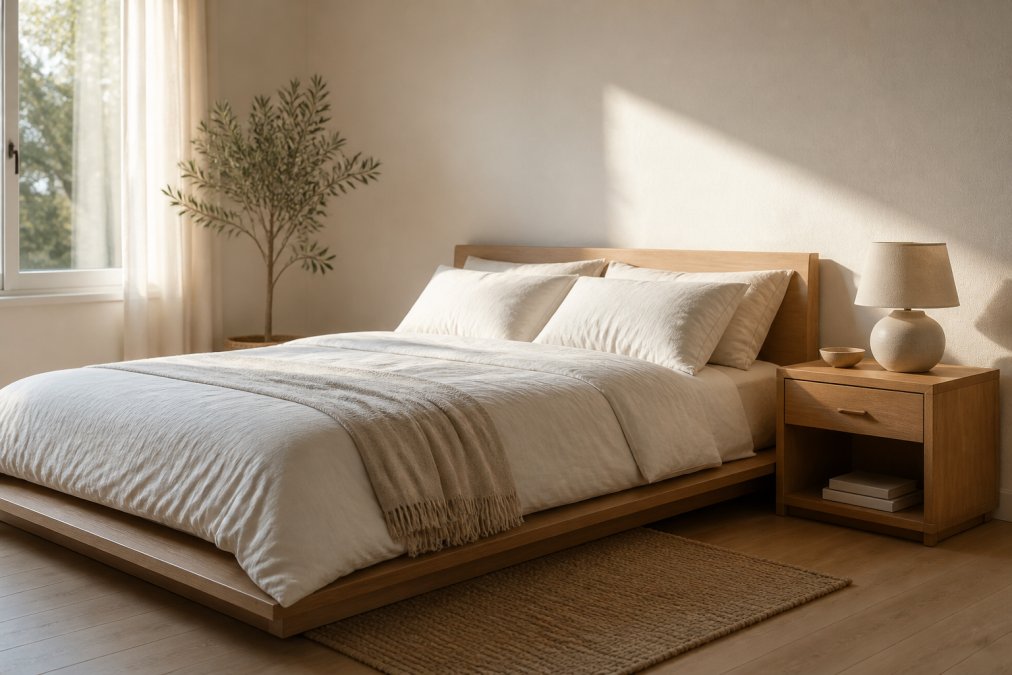
Choose low-profile furniture to keep the eye level low and the ceiling feeling high. A platform bed with a slim frame and a compact nightstand are space-saving choices that maintain proportion. Avoid oversized dressers; instead, use a wall-mounted shelf or a narrow console to hold daily essentials.
Implement Minimalist Bedroom Storage Solutions That Work
Minimalist bedroom storage solutions focus on concealing items to maintain a clutter-free surface, but they don't have to be expensive or permanent. The key is to maximize vertical storage and use every hidden inch without committing to built-ins that landlords won't allow.
Wall-Mounted Storage for Renters Wall-mounted shelving is the renter's best friend because damage is minimal and removal is straightforward. Install floating shelves 12 to 18 inches above the bed using heavy-duty anchors rated for drywall. A single 36-inch shelf can hold books, a small plant, or a framed photo without eating floor space. For a more temporary option, adhesive-backed shelves avoid drilling entirely, though they hold less weight. Arrange items in odd numbers, three books, one plant, two small objects, to create visual balance without clutter.
Under-Bed Storage and Vertical Stacking Under-bed storage boxes are essential for a small bedroom because they use dead space without adding visual weight. Clear plastic bins let you see contents without opening them, reducing the temptation to overstuff. Label each bin by category: seasonal clothing, extra bedding, or off-season items. Stack bins no more than two high to avoid making retrieval difficult. For a DIY approach, repurpose cardboard storage boxes from moving companies and cover them with fabric or kraft paper to match your neutral palette.
Closet Organization on a Budget A curated closet is invisible storage that has the biggest impact on bedroom calm. Use matching wooden or plastic hangers to unify the visual appearance when the door opens. Invest in one set of stackable storage boxes to corral items you need but don't display: extra pillows, blankets, or off-season shoes. Hang a slim over-the-door organizer on the inside of the closet door for accessories, belts, or scarves. This keeps the bedroom itself completely clear.
Platform Bed with Built-In Drawers (DIY Option) If you own your home or have a landlord who permits modifications, a platform bed with drawers maximizes storage without adding furniture. The drawers slide out smoothly and hold off-season clothing or bedding, eliminating the need for a separate dresser.
The One-Tray Rule For items you use daily, phone, watch, glasses, journal, contain them on a single small tray (wood, ceramic, or metal) on your nightstand. This creates a curated vignette that looks intentional rather than cluttered. Everything else goes into drawers or wall-mounted storage. Resist the urge to fill empty nightstand surface area; negative space is what makes a minimalist bedroom feel calm.
Use Lighting and Mirrors to Expand Your Space
Lighting determines how large and inviting a small room feels, but it also directly affects sleep quality and mood, two reasons minimalism in the bedroom matters beyond aesthetics. Strategic lighting and mirrors work together to expand perceived space while supporting the restorative function a bedroom should serve.
Layered Lighting for Both Space and Sleep Layer ambient lighting from the ceiling with task lighting, such as a small reading lamp, to avoid dark corners that shrink the space. A single overhead fixture often creates harsh shadows in small rooms; instead, use a combination of sources. Install a dimmable ceiling light paired with two wall-mounted sconces flanking the bed. This setup frees up nightstand surface area, keeping surfaces clear and the look uncluttered. The key is dimmability: research shows that exposure to bright light in the evening suppresses melatonin production, making sleep harder (peer-reviewed research). A dimmer switch lets you reduce light intensity after sunset, supporting your body's natural sleep cycle while maintaining visual clarity during the day.
Color Temperature and Circadian Rhythm Choose warm white bulbs (2700K color temperature) rather than cool white (4000K or higher), which mimics daylight and can interfere with sleep (the CDC). Warm light feels cozier in a small space and supports melatonin production in the evening. If you use a reading lamp, position it to the side of your bed rather than directly overhead to avoid glare and eye strain. A small bedside lamp with a linen shade diffuses light softly and looks intentional in a minimalist room.
Mirrors as Light Multipliers Mirrors are the most effective tool for creating visual space and amplifying natural light. A large mirror leaning against a wall or mounted opposite a window reflects natural light and doubles the perceived depth of the room. Use one oversized mirror (36 to 48 inches) rather than several small ones, as a single uninterrupted reflection reads as a window into another room. Position the mirror at a 45-degree angle to a window to catch and redirect light across the room, making the space feel brighter without adding electrical fixtures. This is especially valuable in small bedrooms with limited natural light, where every ray matters.
Accent Lighting for Ambiance Without Clutter A subtle light feature can transform the mood in the evenings without adding permanent fixtures or visual noise. A simple LED strip mounted behind a floating shelf creates a soft glow that makes the room feel larger and more intentional. Alternatively, a small accent lamp with a warm bulb on a high shelf casts gentle shadows that add depth. Avoid multiple light sources competing for attention; one well-placed accent light is more minimalist than three mediocre ones.
Practical Placement for Small Rooms In a room under 100 square feet, avoid floor lamps, which take up valuable floor space and create visual clutter. Wall-mounted sconces and ceiling fixtures are your best options. If you must use a table lamp, choose one with a narrow footprint and a light-colored shade that blends with your walls. Keep cords hidden behind furniture or along baseboards using cable clips to maintain the clean aesthetic.
Declutter and Curate What Stays in Your Room
Decluttering is the process of removing everything that does not serve a function or hold meaning, leaving only what supports the minimalist aesthetic. Begin by emptying your surfaces and sorting items into keep, relocate, and discard piles. Be honest about duplicates and items you have not used in the past year; these are prime candidates for removal.
After decluttering, curate what remains by grouping items intentionally. A single tray on the nightstand for a watch and glasses, a stack of three books, and one small plant create a balanced vignette. Resist the urge to fill empty space. In a minimalist bedroom, negative space is a feature, not a flaw. For daily comfort, consider a small humidifier to maintain air quality, which supports better sleep without taking up significant room.
Common Mistakes to Avoid When Styling Small Bedrooms
The most frequent error is pushing all furniture against the walls in an attempt to make the room feel bigger. This often creates a cavernous center with awkward dead zones. Instead, allow some pieces to breathe away from the wall to define functional areas.
Another misstep is choosing furniture that is too large for the scale of the room, which overwhelms the space and blocks natural light. Always measure doorways and hallways before purchasing to ensure the piece can even be delivered. Finally, avoid mixing too many patterns or bold colors, which can make a small room feel chaotic. Stick to a cohesive palette and let texture do the heavy lifting.
| Mistake | Consequence | Fix |
|---|---|---|
| Pushing all furniture to the walls | Creates dead zones and poor flow | Float key pieces to define zones |
| Oversized furniture | Overwhelms the room and blocks light | Measure and choose low-profile pieces |
| Too many patterns and colors | Makes the room feel chaotic and small | Stick to a neutral palette with texture |
| Ignoring vertical space | Wastes prime storage potential | Add wall-mounted shelving or tall units |
By following these steps, you can turn a cramped room into a functional and serene escape. The right combination of a neutral palette, smart layout, and concealed storage makes all the difference.
Styling a small bedroom with minimalist decor comes down to disciplined choices about layout, color, and storage. It requires resisting the urge to fill space and instead trusting that negative space creates calm. At Uniq Trenz, we curate compact and durable home essentials, from space-saving organization tools to ambient lighting and wellness gadgets that support a restful environment. Explore our collection to find pieces that help you maintain a clutter-free, intentional space. Get started with Uniq Trenz and build the serene bedroom you deserve.
Frequently Asked Questions
What are the key elements of minimalist bedroom decor for small spaces?
Minimalist bedroom decor focuses on essential furniture, a neutral or monochromatic color palette, and intentional negative space. The goal is to create a clutter-free, functional room that feels larger and more peaceful. Keep only items that serve a purpose or bring joy, invest in multi-functional pieces, and use wall-mounted storage to maximize floor space. This approach reduces visual weight and makes small bedrooms feel more open and restful.
How can I maximize storage in a small minimalist bedroom?
Maximize storage by using vertical space with wall-mounted shelving, under-bed storage containers, and built-in solutions. Choose low-profile furniture with hidden storage compartments. Install floating shelves above your desk or nightstand to keep surfaces clear. Consider a bed frame with drawers underneath, and use slim, streamlined storage boxes in neutral tones that blend with your decor. The key is keeping storage out of sight while maintaining easy access to daily essentials.
What color palettes work best for small minimalist bedrooms?
Stick with neutral palettes like soft whites, warm grays, beige, and earthy tones that create a sense of spaciousness and calm. These monochromatic or near-monochromatic schemes reflect light and make rooms feel larger. Add textural contrast with different fabric finishes, linen, cotton, and wood, rather than introducing multiple colors. If you want subtle warmth, layer in warm neutrals like taupe or soft cream. Avoid bold colors or busy patterns that can overwhelm a small space.
Can I use lighting and mirrors to make my small bedroom feel bigger?
Yes. Mirrors reflect light and create the illusion of depth, making rooms feel more spacious. Place a mirror opposite a window or light source to maximize brightness. Use ambient lighting with soft LED options like the Northern Lights Star Projector ($89.99) to create a cozy refuge without harsh shadows. Layer lighting with bedside lamps and wall-mounted fixtures to avoid dark corners. Proper lighting enhances your minimalist aesthetic while making the space feel more open and inviting.
This article was written using GrandRanker