

Painless Facial Hair Removal for Women: 2026 Guide
Table of Contents
- Best Facial Hair Removal Methods for Women
- How to Use a Facial Hair Trimmer Correctly
- Best Facial Hair Removal for Sensitive Skin
- Dermaplaning at Home Safety Tips
- How to Prevent Ingrown Hairs on Face
- Long-Term Skin Barrier Health and Sustainability
- Common Mistakes to Avoid
- Conclusion
Last Updated: August 5, 2026
Best Facial Hair Removal Methods for Women
Facial hair removal for women has evolved far beyond one-size-fits-all solutions. The question isn't whether you should remove facial hair, it's finding the method that works for your skin type, hair texture, and lifestyle. At Uniq Trenz, we understand that busy women need solutions that deliver results without pain, irritation, or hours spent in preparation.
The most effective painless facial hair removal methods fall into three main categories: electric trimmers, depilatory products, and professional techniques you can safely perform at home. Electric trimmers work best for coarse hair and sensitive skin. Depilatory creams suit those seeking longer-lasting results. Dermaplaning and threading offer precision for fine peach fuzz and specific facial contours.
Electric Facial Hair Trimmers
Electric facial hair trimmers represent the fastest, most convenient option for women managing regular facial hair. These devices use oscillating or rotating blades to cut hair at skin level without pulling or tugging. Modern trimmers designed for facial use are hypoallergenic, feature ergonomic designs that fit facial contours naturally, and include LED light precision to help you see exactly what you're trimming. Most models are rechargeable, eliminating constant battery replacement.
Setup takes under two minutes, with visible smoothness immediately after use. Trimmed hair regrows within 3-7 days, depending on your hair growth cycle and hair texture. One important note: electric trimmers work differently depending on your hair type. Coarse hair responds better than fine vellus hair because the blades catch thicker strands more effectively. For peach fuzz, you may need to use the device multiple times or combine it with another method for optimal results.
Depilatory Creams and Powders
Depilatory products work through chemical keratin breakdown, dissolving hair below the skin surface. Results last 3-7 days, longer than trimming but shorter than waxing. The appeal is obvious: no pain, no equipment, minimal preparation.
However, depilatory creams require careful ingredient selection for facial use. Look specifically for products labeled as facial depilatories, as these formulations are gentler and less likely to cause skin irritation. A common mistake is applying depilatory cream and leaving it on longer than recommended, thinking it will work better. This actually increases the risk of irritation and follicle damage. Follow timing instructions precisely, usually 5-10 minutes. Patch testing is non-negotiable before full application, apply a small amount to your inner arm or behind your ear 24 hours before facial use to check for allergic reactions.
Threading and Dermaplaning
Threading is an ancient technique that uses twisted thread to catch and remove hair at the follicle level. Dermaplaning uses a sterile blade held at a 45-degree angle to gently scrape away both hair and dead skin cells. Both methods offer precision for specific areas like upper lip and eyebrows.
Threading delivers longer-lasting results than trimming, typically 3-4 weeks, because it removes hair from the root. Dermaplaning lasts 2-3 weeks and includes the bonus benefit of exfoliation, leaving skin smoother and brighter. Both require steady hands and practice to perform safely at home.
How to Use a Facial Hair Trimmer Correctly
Using an electric facial hair trimmer correctly means understanding the device, preparing your skin properly, and applying consistent technique. Most women skip preparation steps, which is why they experience irritation or inconsistent results.
Preparation and Patch Testing
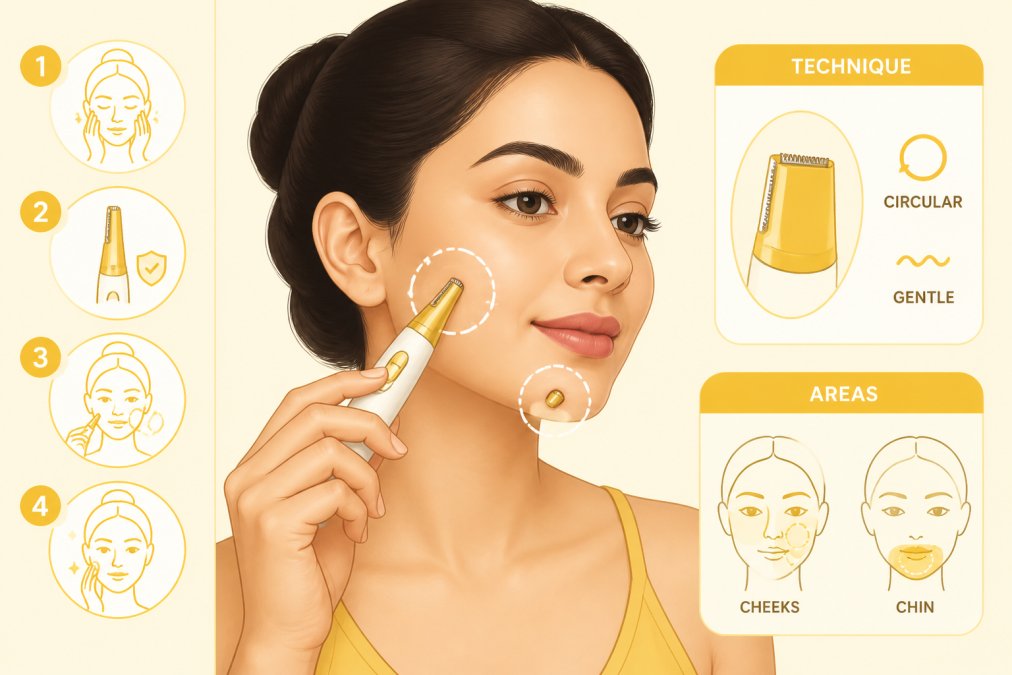
Before your first use, perform a patch test. Apply the trimmer to a small area behind your ear or on your inner arm and wait 24 hours to confirm no allergic reaction or skin irritation develops.
Wash your face with a gentle cleanser and pat dry completely. Moisture interferes with blade contact and increases the risk of nicks. Check that the device is clean and the blades are sharp. Dull blades pull hair instead of cutting cleanly, causing discomfort and post-treatment redness.
Step-by-Step Trimming Technique
Hold the device at a 90-degree angle to your skin, perpendicular to your face. Turn on the trimmer and begin with light pressure on the upper lip area, moving in gentle circular motions rather than straight lines. Circular motions follow your facial contours naturally and reduce the risk of catching skin.
Move systematically across the chin, then to the cheeks if needed. Use your free hand to gently stretch skin slightly, which helps the trimmer glide smoothly. After trimming, rinse your face with cool water, pat dry, and apply a soothing agent like aloe vera or a hydrating moisturizer. Avoid makeup for at least 30 minutes after trimming to allow your skin to settle.
Best Facial Hair Removal for Sensitive Skin
Women with sensitive skin face a genuine challenge: most hair removal methods carry a risk of irritation, redness, or allergic reaction. The solution isn't avoiding hair removal, it's choosing methods and products designed specifically for reactive skin.
Hypoallergenic Products and Ingredients
Hypoallergenic facial hair removal products have been formulated to minimize common irritants. Look for products free of fragrance, alcohol, and sulfates. For electric trimmers, hypoallergenic design means the device doesn't contain nickel or other metals that trigger contact dermatitis.
Depilatory creams marketed for sensitive skin use gentler formulations with soothing agents like aloe vera, chamomile extract, and oat extract. When selecting any hair removal product, read the full ingredient list and patch test before facial application.
Avoiding Skin Irritation and Post-Treatment Redness
Post-treatment redness typically appears within 30 minutes of hair removal and fades within 2-4 hours for most women. Prevention starts before you remove hair. Avoid any other active skincare treatments, retinoids, vitamin C serums, exfoliating acids, for at least 48 hours before and after hair removal.
After removal, apply a hydrating moisturizer formulated for sensitive skin with ceramides or hyaluronic acid. Avoid products with fragrance or essential oils. If redness persists beyond four hours or develops into a rash, discontinue the method and consult a dermatologist.
Dermaplaning at Home Safety Tips
Dermaplaning is one of the most misunderstood at-home techniques. When done correctly, it's safe and effective. When done incorrectly, it causes nicks, cuts, and unnecessary skin damage.
Proper Tool Selection and Sterilization
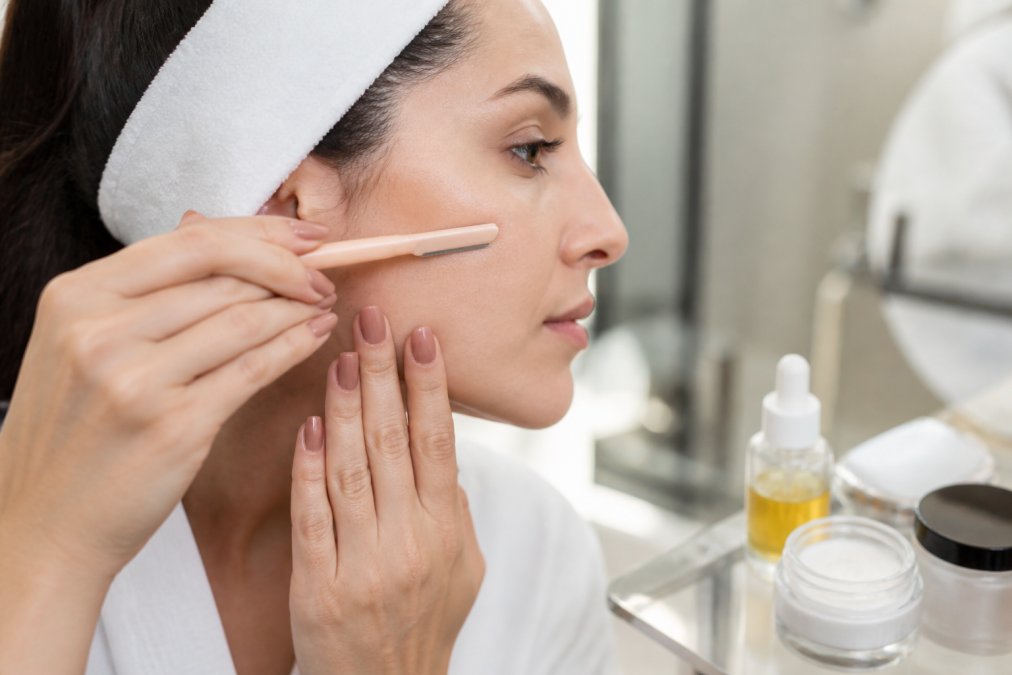
Dermaplaning requires a sterile blade designed specifically for facial use. Do not use regular razors or craft blades. Professional dermaplaning tools are available online and in beauty supply stores. Look for stainless steel blades with 18 karat gold plating, which resists corrosion and irritation.
Before each use, sterilize your blade by washing it under hot running water with soap, then soaking it in rubbing alcohol for 30 seconds. Pat dry with a clean cloth. Store your tool in a clean, dry location, never exposed in a bathroom where moisture accumulates.
Technique and Aftercare
Hold the blade at a 45-degree angle to your skin, this is critical. Use light pressure and short, downward strokes. The blade should glide across your skin, not dig into it. Work in one direction only, don't saw back and forth. Start with small areas like the upper lip or chin before expanding to larger areas.
After dermaplaning, wait at least 24 hours before using any exfoliating acids, retinoids, or vitamin C products. Apply a gentle, hydrating moisturizer and sunscreen. Freshly dermaplaned skin is more vulnerable to sun damage, use SPF 30 or higher daily for at least one week after treatment.
How to Prevent Ingrown Hairs on Face
Ingrown hairs occur when hair grows back into the skin instead of emerging normally. Prevention is far easier than treatment.
Pre-Removal and Post-Removal Care
Before removing facial hair, exfoliate gently with a soft washcloth or gentle exfoliating product to remove dead skin cells. Hydrate your skin thoroughly, well-hydrated skin is more resilient and less prone to ingrown hair formation.
After hair removal, avoid tight clothing or touching the treated area for at least 24 hours. Keep the area clean but avoid scrubbing or aggressive washing. Apply a lightweight, non-comedogenic moisturizer daily. If an ingrown hair develops, resist the urge to pick at it. Instead, apply a warm compress for 5-10 minutes to soften the area, then gently exfoliate with a soft cloth. If the hair doesn't emerge within a few days or the area becomes infected, consult a dermatologist.
Long-Term Skin Barrier Health and Sustainability
Frequent facial hair removal impacts your skin barrier over time. Your skin barrier is a protective layer of lipids and dead skin cells that prevents water loss and keeps irritants out. Repeated hair removal can compromise this barrier, causing persistent dryness, sensitivity to products you've used before, and increased redness after any treatment.
Rotating between methods reduces the risk of barrier damage. Use an electric trimmer one month, then switch to a depilatory cream the next. Invest in barrier-supporting products with ceramides, hyaluronic acid, and niacinamide.
Consider the environmental impact of your chosen method. Electric trimmers are rechargeable and generate minimal waste. Dermaplaning generates no waste beyond the blade itself, which lasts months. Threading uses thread only. If sustainability matters to you, these factors deserve consideration.
Common Mistakes to Avoid
Skipping patch testing is the most common error. Even if you've used a product before, your skin changes. Patch test every time you try a new product or method.
Using dull blades or old products is another frequent mistake. Dull electric trimmer blades pull hair instead of cutting cleanly. Old depilatory creams lose potency. Applying too much pressure during trimming or dermaplaning causes nicks and irritation. Light pressure is sufficient.
Removing hair too frequently accelerates barrier damage and increases ingrown hair risk. Most women don't need to remove facial hair more than once weekly. Skipping aftercare is tempting but costly, the 5-10 minutes spent applying moisturizer and sunscreen prevents days of irritation and redness.
Facial hair removal doesn't have to mean pain, irritation, or complicated routines. The right method, combined with proper technique and consistent aftercare, delivers smooth skin without compromise. Whether you choose electric trimmers for speed, depilatory creams for convenience, or dermaplaning for precision, success depends on understanding your skin and respecting its needs.
Uniq Trenz offers a curated selection of high-quality electric facial hair trimmers and complementary skincare products designed to support your routine. Our trimmers feature ergonomic designs, LED light precision, and hypoallergenic construction, exactly what busy women need for effortless beauty. Browse our collection today and discover tools that make painless facial hair removal genuinely simple. START SHOPPING
Frequently Asked Questions
What is the safest way for a woman to remove painless facial hair?
Electric facial hair trimmers designed with hypoallergenic materials and ergonomic design offer one of the safest options, especially for sensitive skin. They use gentle touch technology to remove vellus hair and peach fuzz without nicks and cuts. For best results, patch test first, use circular motions following facial contours, and apply soothing agents afterward to prevent skin irritation and post-treatment redness.
How do I use a facial hair trimmer without causing skin irritation?
Start with a patch test on a small area 24 hours before full use. Cleanse your face and ensure skin is completely dry. Use gentle, circular motions following your facial contours rather than pressing hard. Move the trimmer slowly across areas with coarse hair or fine vellus hair. Avoid the eye area. After trimming, apply a hypoallergenic moisturizer or soothing agent to support your skin barrier and reduce redness.
Is at-home dermaplaning safe for facial hair removal?
Yes, when done correctly with proper tools and technique. Use a dermatologist-tested dermaplaning tool with LED light precision for visibility. Sterilize your tool before use. Apply gentle pressure at a 45-degree angle, moving in short strokes. Avoid the eye area and sensitive regions. Post-removal, use gentle cleansing and apply soothing agents. If you have active acne or very sensitive skin, consult a dermatologist first.
What can I do to prevent ingrown hairs after facial hair removal?
Exfoliate gently 2-3 times weekly with a soft exfoliating cloth to prevent follicle blockage and ingrown hair prevention. Before removal, use warm water to soften hair and open follicles. After removal, apply a lightweight, hypoallergenic moisturizer to maintain your skin barrier. Avoid tight products that could trap hair. If ingrown hairs develop, use a gentle exfoliant and avoid picking, let the follicle resolve naturally while keeping skin clean and moisturized.
This article was written using GrandRanker