

Organize Small Apartment on a Budget: 7 Proven Steps
Table of Contents
- How to Organize Small Apartment on a Budget: A Step-by-Step Framework
- Step 1: Decluttering a Small Apartment, The Foundation
- Step 2: Vertical Storage Ideas for Small Apartments
- Step 3: Multifunctional Furniture for Small Apartments
- Step 4: DIY Small Apartment Organization Hacks
- Step 5: Kitchen and Pantry Storage Optimization
- Step 6: Entryway and Hidden Storage Solutions
- Step 7: Maintenance and the Psychology of Small-Space Living
Organize Small Apartment on a Budget: 7 Proven Steps
Last Updated: July 28, 2026
Learning how to organize small apartment on a budget doesn't require expensive systems or professional organizers. At Uniq Trenz, we've tracked the most effective strategies that help renters and homeowners maximize every square foot without breaking the bank. This guide walks you through seven actionable steps that address the real obstacles small-space dwellers face, from decluttering to building habits that keep your apartment clutter-free long-term.
How to Organize Small Apartment on a Budget: A Step-by-Step Framework
What You'll Need Before You Start
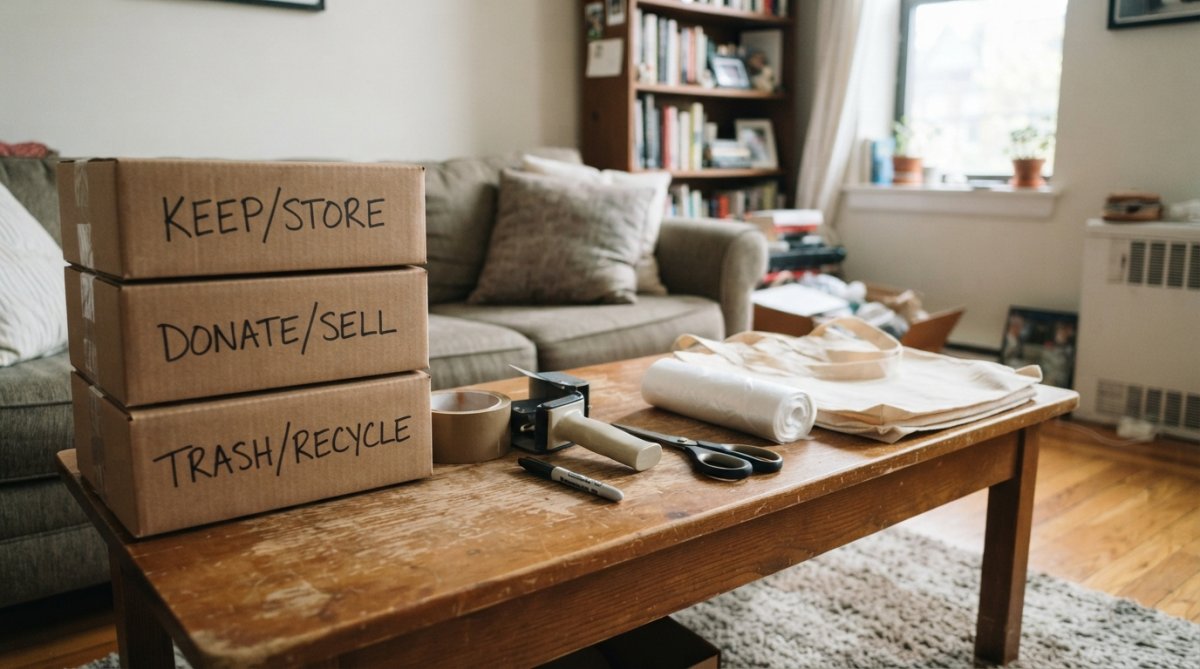
Gather basic supplies you likely already have: trash bags, boxes or bins from online orders, a measuring tape, labels or a marker, and a notebook. That's genuinely it. Many people buy elaborate organizing systems before decluttering, which wastes money on containers they won't need. Optional but helpful: drawer dividers (cardboard works), contact paper, and stackable bins only after assessing your space.
| Item | Cost | Purpose | Alternative |
|---|---|---|---|
| Trash bags | $3-5 | Sorting donations | Grocery bags, boxes |
| Measuring tape | $2-4 | Space planning | Smartphone app |
| Labels/marker | $1-3 | Identifying storage | Painter's tape |
| Repurposed boxes | $0 | Initial storage | Cardboard from deliveries |
| Drawer dividers | $5-10 | Compartmentalizing | DIY cardboard |
Step 1: Decluttering a Small Apartment, The Foundation
Decluttering is where every successful small-apartment organization starts. You cannot organize clutter, you can only store it more neatly. Every item takes up real space that could hold something you actually use.
The Four-Box Method for Small Spaces
Get four containers and label them: Keep, Donate, Sell, and Recycle. Go through each room systematically, placing every item in one category. No "maybe" pile. Keep only items you use regularly or genuinely love. The Donate box holds items in good condition you no longer need. The Sell box is for items worth $20 or more, listed on Facebook Marketplace or Craigslist. The Recycle box handles broken items or materials your local program accepts.
Act on your decisions within one week. Procrastination turns decluttering into a failed project. When items leave your apartment, you feel the relief. The space physically opens up.
Step 2: Vertical Storage Ideas for Small Apartments
After decluttering, vertical space becomes your best friend. Walls are wasted real estate in most small apartments. Vertical storage shifts the burden upward, freeing floor space for movement and living.
Floating Shelves and Wall-Mounted Solutions
Floating shelves are the most versatile vertical storage solution, costing $15-40 depending on size and material. A single shelf above the desk eliminates the need for a nightstand. In the kitchen, shelves replace cabinet space. In the entryway, a wall-mounted shelf holds keys and mail. Floating shelves also create visual interest, making small spaces feel intentional rather than cramped.
Budget-Friendly DIY Vertical Installations
Command strips and adhesive hooks hold significant weight without drilling, costing $5-15 for a set. For permanent solutions, drilling small holes for shelf brackets is standard and easily patched before moving out. Use a stud finder ($15-25) to locate wall studs for the strongest anchor points.
DIY installation saves hundreds compared to hiring professionals. The actual work takes 30 minutes per shelf. Measure twice, mark once, drill, insert anchors, attach brackets, place shelf.
Step 3: Multifunctional Furniture for Small Apartments
Every piece should serve multiple purposes or solve a specific storage problem. A bed with drawers underneath, a headboard with shelves, or a frame that accommodates storage bins transforms the piece from single-purpose to essential.
Fold-Down Tables, Rolling Islands, and Hidden Storage Furniture
Fold-down tables mount on the wall and fold up when not in use, reclaiming floor space instantly. A 24x36-inch fold-down table provides workspace for a laptop or dining surface but takes up zero floor space when folded, costing $40-150.
Rolling islands work in kitchens or as mobile storage. When you need the space, push it to the side. When you need storage, roll it back. A small rolling island with shelves and countertop costs $60-200.
Storage ottomans combine seating with hidden storage, costing $50-150. They work in bedrooms, living rooms, or entryways while keeping clutter out of sight.
Buy vs. DIY: Cost Comparison for Small-Space Furniture
A store-bought fold-down table runs $80-150. You can build one for $30-50 using a wooden desktop, hinges, and wall brackets, saving $50-100. Storage ottomans from retailers cost $80-200; a DIY version costs $30-60. DIY wins when the project is simple and saves substantial money. Buy when the project requires specialized skills or tools you don't have.
Step 4: DIY Small Apartment Organization Hacks
Small apartment organization hacks are creative solutions that cost almost nothing. They work because they address specific problems with available materials.
Drawer Dividers, Stackable Bins, and Under-Bed Storage
Drawer dividers prevent chaos when items shift around. Store-bought dividers cost $10-30 per set. A DIY version uses cardboard from Amazon boxes, cut to size and placed inside drawers, costing $0.
Stackable bins organize closets, shelves, and under-bed spaces. Clear plastic bins ($3-8 each) let you see contents without opening them. Label each bin. A typical small apartment needs 8-12 bins depending on what you're storing.
Under-bed storage is often completely unused. Flat storage bins slide under easily, holding seasonal clothing, extra bedding, or archived documents.
Closet Organization Systems on a Shoestring Budget
Remove everything from your closet and sort into Keep, Donate, and Sell piles. For the Keep pile, arrange by category: pants, shirts, dresses, jackets. Within each category, arrange by color. This takes 20 minutes and transforms your closet from chaotic to functional.
Add hanging organizers ($5-15) for shelves inside the closet door. Cascading hangers ($8-12) let you hang multiple pants on one hanger, doubling hanging space.
Step 5: Kitchen and Pantry Storage Optimization
Kitchens in small apartments are notoriously cramped. Every inch of cabinet and counter space matters.
Maximizing Cabinet and Counter Space
Remove everything from your cabinets and drawers. Assess what you actually use. Stack plates and bowls vertically using plate dividers ($5-10), doubling your cabinet space. Store frequently used items at eye level. Keep your most-used cooking tools in the drawer closest to the stove.
Use vertical space inside cabinets with shelf risers ($8-15), turning one shelf into two. A cabinet that held 12 items now holds 20.
Counter space shrinks when small appliances occupy it permanently. Store your coffee maker, toaster, or blender in a cabinet and pull it out only when needed. If you use something daily, it earns permanent counter space. Otherwise, it gets stored.
Drawer dividers in kitchen drawers ($5-12) prevent utensil chaos. Forks, spoons, knives, and cooking utensils each get their own section.
Step 6: Entryway and Hidden Storage Solutions
Entryways are the first impression of your apartment and often the most cluttered. An organized entryway makes your whole apartment feel more put-together.
An ottoman with storage ($40-80) holds shoes and bags. Wall-mounted coat racks ($20-40) replace floor-based coat stands. Floating shelves above the entryway hold keys and mail in baskets ($5-10 each).
A mail organizer ($5-15) prevents paper from spreading across surfaces. Mount it on the wall next to the door. Bills get processed, ads get recycled, and important documents get filed.
Install 4-6 hooks ($2-5 each) on the entryway wall for bags, jackets, and daily-use items. Everything has a designated spot.
Step 7: Maintenance and the Psychology of Small-Space Living
Organization isn't a one-time project. It's a system you maintain. Small spaces demand discipline because clutter compounds quickly.
Weekly and Monthly Organization Maintenance Schedules
Weekly maintenance takes 15 minutes. Sunday evening works well. Walk through your apartment and return items to their designated spaces. This prevents the slow accumulation that turns an organized apartment into a cluttered one.
Monthly maintenance takes 30 minutes. Review each storage area. Are bins still organized? Do you still use everything in your cabinets? Remove items you're no longer using. Adjust storage solutions that aren't working.
Seasonal maintenance happens quarterly. Review your entire apartment, rotate seasonal clothing, donate items you didn't use, and reorganize based on what you've learned about your habits.
Building Sustainable Minimalism Habits
Sustainable minimalism in a small apartment means owning fewer items intentionally. It's not about deprivation, it's about keeping only what adds value to your life.
The key habit is the "one in, one out" rule. When you buy something new, donate something old. This keeps your total possessions stable. Your apartment stays organized because you're not constantly adding more.
Another essential habit is the "30-day rule." If you haven't used something in 30 days, consider whether you actually need it. This rule prevents the accumulation trap.
Small apartment organization on a budget is achievable when you prioritize ruthlessly and maintain consistently. The strategies in this guide work because they address the real constraints: limited space, limited money, and limited time. Uniq Trenz offers compact, high-quality storage solutions and organizational tools designed specifically for small spaces, from stackable bins and drawer organizers to space-saving furniture accessories. Start with decluttering this week, implement one vertical storage solution, and build from there. Your organized small apartment is closer than you think.
Frequently Asked Questions
What's the cheapest way to organize a small apartment on a budget without buying new furniture?
Start by decluttering ruthlessly using the four-box method, then leverage vertical space with affordable floating shelves or wall-mounted organizers. Use stackable storage bins, drawer dividers made from cardboard, and under-bed storage containers you may already own. DIY solutions like repurposed boxes, pegboards, and tension rods cost under $50 total. The key is maximizing existing square footage before spending money on new pieces.
How do I organize a small apartment with too much stuff on a tight budget?
Prioritize aggressive decluttering first, this is free. Sort items using the four-box method (keep, donate, sell, discard). Then invest in multifunctional furniture like ottoman storage or fold-down tables that serve dual purposes. Use vertical storage solutions such as floating shelves and wall-mounted organizers to reclaim floor space. Finally, implement stackable bins and drawer dividers to contain remaining items. This phased approach prevents overspending on storage for things you don't need.
What DIY small apartment organization hacks actually save money versus buying storage products?
Repurpose cardboard boxes as drawer dividers, use tension rods in cabinets for vertical hanging storage, and create floating shelves from reclaimed wood or affordable materials. Under-bed storage using vacuum-seal bags costs pennies. Pegboards provide customizable wall organization for under $20. Closet organizers made from dollar-store bins and labels work as well as expensive systems. These DIY solutions typically cost 70-80% less than branded storage furniture while delivering identical functionality.
How often should I maintain my small apartment organization system to keep it clutter-free?
Weekly: Spend 15 minutes returning items to designated storage spots and clearing visible surfaces. Monthly: Review one category (kitchen, closet, entryway) and remove items no longer used. Quarterly: Reassess your entire system and adjust storage solutions if certain areas consistently overflow. This maintenance schedule prevents clutter from accumulating and keeps your space-saving organization system functioning effectively without requiring a complete overhaul.
This article was written using GrandRanker