

Shop Trending Products Safely: A 2026 Guide
Table of Contents
- Why Safety Matters When Shopping Trending Products
- How to Spot Fake Online Stores Before You Buy
- Verify Seller Reputation and Supply Chain Transparency
- Best Practices for Secure Online Payments
- Evaluate Product Authenticity and Quality
- How to Report Online Shopping Scams to the FTC
- Understand Your Consumer Protection Rights
- Shop Trending Products Safely: Your Action Checklist
Shop Trending Products Safely: A 2026 Guide
Last Updated: August 4, 2026
How to shop trending products safely has become essential as online retail explodes with new items launching daily across social platforms, marketplaces, and independent storefronts. At Uniq Trenz, we've tracked a significant rise in counterfeit products, phishing websites, and payment fraud targeting shoppers hunting for the latest trending items. The challenge isn't finding what's trending, it's knowing which retailers are legitimate and which products are authentic before your money changes hands.
This guide covers practical steps to verify seller credibility, authenticate products, and protect your payment information when shopping for trending items online.
Why Safety Matters When Shopping Trending Products
Trending products attract bad actors. When an item goes viral on social media or gains sudden market demand, scammers rush to capitalize with counterfeit goods, fake storefronts, and payment schemes designed to steal credentials and funds. The ecommerce landscape in 2026 makes it easy for anyone to launch a storefront, which means legitimate retailers operate alongside sophisticated fraud operations that copy real websites down to the logo.
Consumer behavior around trending items creates vulnerability. Shoppers often make impulse purchases without researching the seller, skip security checks, and use unsecured payment methods. According to Federal Trade Commission consumer fraud data, payment fraud and counterfeit product complaints have increased significantly in recent years as trend-driven shopping accelerates.
The stakes are real. A counterfeit product wastes your money and may damage your skin, hair, or devices if it contains harmful materials. Fraud on your payment card can trigger identity theft, compromised bank accounts, and months of dispute resolution.
How to Spot Fake Online Stores Before You Buy
A fake online store looks polished enough to fool most shoppers at first glance. Scammers copy legitimate retailer websites, use similar domain names, and invest in professional design. The difference lies in details that take 60 seconds to verify.
Check for SSL certificates and secure URLs
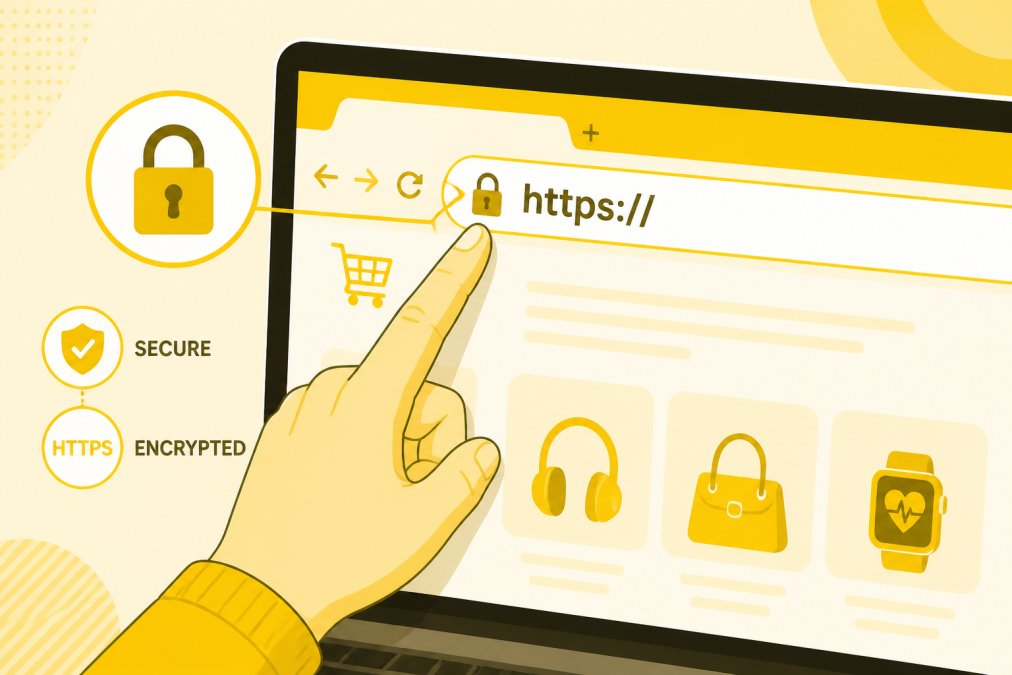
Every legitimate online store uses HTTPS (not HTTP) and displays a padlock icon in the browser address bar. This indicates an SSL certificate, a security protocol that encrypts data between your browser and the website's server. Without it, your payment information travels unencrypted.
To verify SSL security:
- Look at the URL bar before entering any personal information
- Confirm the URL starts with "https://" not "http://"
- Click the padlock icon to view the certificate details
- Check that the certificate is issued to the domain you're visiting
- Verify the certificate hasn't expired
Fake stores often use free SSL certificates or certificates issued to unrelated domains. If the padlock is missing or the certificate details don't match the domain, close the browser and shop elsewhere.
Verify business registration and contact information
Legitimate retailers display clear contact information: a physical business address, phone number, and email address. Fake stores bury contact details or provide only a contact form with no phone number.
Search for the business by entering the company name into your state's business registry, looking up the phone number and address on Google Maps, and calling the phone number directly to verify it's real. Scammers often use virtual mailbox services or fake addresses that don't correspond to real office locations.
Review customer feedback and ratings
Real customer reviews appear on multiple platforms: Google Reviews, Trustpilot, the Better Business Bureau, and industry-specific review sites. Fake stores either have no reviews or show suspiciously perfect ratings with generic praise that lacks specific product details.
Look for reviews mentioning specific product features or delivery timelines, check review dates to confirm they accumulate over months and years, and search for the store name plus "scam" or "fake" to find warning posts. A single negative review among dozens of positive ones is normal. A pattern of complaints about unshipped orders, counterfeit items, or payment fraud is a serious warning sign.
Verify Seller Reputation and Supply Chain Transparency
Understanding where products come from matters. Trending items often originate from legitimate manufacturers but pass through unauthorized distributors or counterfeiters before reaching retail. Transparent sellers document their supply chain and can answer questions about product sourcing.
Research seller history and return policies
Established sellers have verifiable histories. Check how long the seller has operated by searching business databases, looking at domain registration dates, and reviewing their social media presence. A seller active for 5+ years with consistent positive feedback is far more trustworthy than a new account with limited history.
Return policies reveal seller confidence. Legitimate retailers offer 30-90 day returns because they stand behind product quality. Scammers offer no returns or require return shipping fees that exceed the product's value. Read the fine print carefully, including how many days you have to return, who pays return shipping, what condition the product must be in, and how long refunds take to process.
Look for third-party verification badges
Third-party verification services audit retailers and display trust badges on their websites. Common legitimate badges include McAfee Secure, Norton LifeLock, BBB Accredited Business, Trustpilot Verified, and SSL trust seals from Certificate Authorities.
Click on any badge to verify it's genuine. Scammers copy badge images without actually earning certification. A real badge links to the verification service's website where you can confirm the store is listed.
Best Practices for Secure Online Payments
Your payment method determines your fraud protection. Different payment options offer different levels of recourse if something goes wrong.
Use secure payment gateways and credit cards
Credit cards offer the strongest fraud protection. Under the Fair Credit Billing Act, you can dispute unauthorized charges within 60 days and typically receive provisional refunds while the dispute is investigated. Credit card companies absorb fraud losses, not consumers.
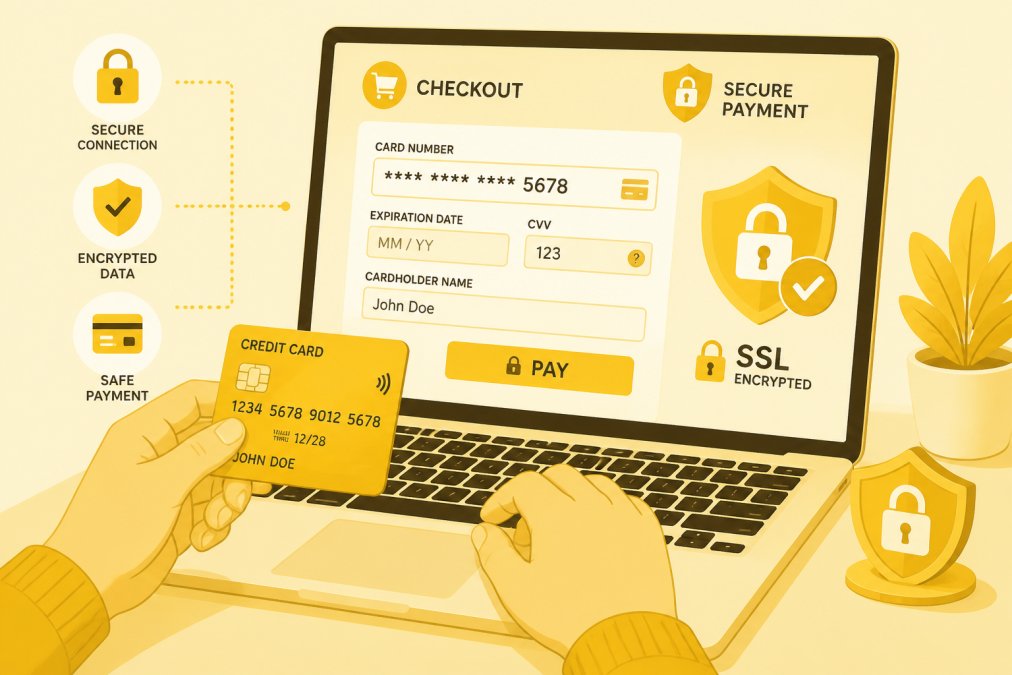
When checking out, look for these security signals: the payment form is hosted on the retailer's secure server with "https://" and padlock icon, the payment processor is a recognized company like Stripe, Square, or PayPal, the form requests only necessary information, the site does NOT ask for your PIN or full Social Security number, and multi-factor authentication is offered for account login.
Debit cards offer weaker protection. If fraud occurs, you must report it quickly or lose your money entirely. Digital wallets (Apple Pay, Google Pay) add a security layer by tokenizing your card information so the retailer never sees your actual card number.
Avoid wire transfers and direct bank payments
Wire transfers and direct bank transfers offer zero fraud protection. Once money leaves your account, it's gone. Scammers specifically request these payment methods because they're irreversible.
Never use wire transfer services, direct bank transfers, cryptocurrency payments, gift cards as payment, or prepaid card transfers for consumer retail purchases. If a retailer insists on these methods, it's a major red flag for fraud.
Evaluate Product Authenticity and Quality
Counterfeit trending products are manufactured to look identical to authentic versions. The difference often lies in packaging details, serial numbers, and performance.
Compare product details across trusted retailers
Authentic trending products maintain consistent specifications across legitimate retailers. Before purchasing from an unfamiliar retailer, find the product on the official manufacturer's website, note the exact specifications and packaging details, and compare the unfamiliar retailer's listing to the official version.
Counterfeiters often make subtle changes: wrong logo colors, misspelled brand names, or incorrect weight specifications. Search for the product on multiple established retailers like Amazon, Best Buy, Target, or the manufacturer's official store. Legitimate trending products appear on multiple platforms with consistent pricing and specifications.
Check packaging, labels, and product serial numbers
Physical inspection reveals counterfeits. When your package arrives, examine packaging quality, serial numbers, holograms and security features, weight and dimensions, and product performance. Legitimate products include serial numbers that can be verified on the manufacturer's website.
If anything seems off, poor packaging quality, missing serial numbers, or performance issues, contact the retailer immediately and request a return. Document everything with photos.
How to Report Online Shopping Scams to the FTC
If you've been defrauded or received counterfeit products, reporting to the Federal Trade Commission creates an official record and helps protect other consumers. Report fraud through the FTC's official complaint portal. Provide the retailer's website URL and business name, your transaction date and order number, the payment method used, a detailed description of what happened, screenshots of website pages or communications, and the amount of money lost.
For counterfeit products, also report to the product manufacturer's anti-counterfeiting team, the marketplace where you found the listing, and your state's Attorney General consumer protection office.
Understand Your Consumer Protection Rights
Federal law protects consumers purchasing trending products online. The FTC Act prohibits unfair and deceptive practices in commerce, meaning retailers must accurately describe products, cannot misrepresent authenticity, must disclose material facts before purchase, cannot charge your card without authorization, and must honor stated return policies.
The Restore Online Shoppers Confidence Act specifically addresses online fraud by requiring clear identification of who's selling the product, honest product descriptions, truthful pricing, simple cancellation processes for recurring charges, and clear return policies.
Chargeback procedures and dispute resolution
If a retailer charges your card fraudulently or sends counterfeit products, you can initiate a chargeback through your credit card company. Contact your credit card company's fraud department immediately, explain the fraudulent charge or counterfeit product, provide documentation including order confirmation and product photos, and request a chargeback and temporary credit while the investigation proceeds.
For disputes with marketplace sellers, use the platform's built-in dispute resolution process first. If the retailer refuses to resolve the issue, you can escalate to your state's Attorney General or file a complaint with the Consumer Financial Protection Bureau.
Shop Trending Products Safely: Your Action Checklist
Use this checklist before purchasing from any unfamiliar retailer selling trending products:
| Step | Action | Why It Matters |
|---|---|---|
| 1. Verify SSL security | Check for HTTPS and padlock icon | Protects your payment data from interception |
| 2. Check business registration | Search state business database | Confirms the retailer is a real business |
| 3. Review customer feedback | Look for specific, dated reviews | Identifies patterns of fraud or counterfeits |
| 4. Research return policy | Confirm 30+ day returns accepted | Protects you if the product is counterfeit |
| 5. Compare specifications | Check official manufacturer details | Spots counterfeit products with altered specs |
| 6. Use credit card | Avoid wire transfers or direct payments | Provides legal fraud protection and chargebacks |
| 7. Inspect upon arrival | Check packaging, serial numbers, quality | Confirms authenticity before payment clears |
| 8. Report if defrauded | File FTC complaint and chargeback | Protects other consumers and recovers your money |
Before entering payment information, take 60 seconds to verify SSL security, business registration, and customer reviews. This simple habit eliminates the vast majority of fraudulent retailers and counterfeit products.
When shopping for trending items, prioritize established retailers and direct manufacturer websites. Uniq Trenz curates trending products from verified suppliers and stands behind every item with transparent sourcing and hassle-free returns. Every product undergoes authenticity verification before it reaches your cart, eliminating the guesswork from trending product shopping.
Shopping trending products safely doesn't require paranoia, it requires awareness. Counterfeit products and fraudulent retailers prey on impulse purchases and rushed checkout processes. By verifying seller legitimacy, authenticating products, and using protected payment methods, you eliminate the vast majority of risk. When you encounter fraud despite these precautions, federal law protects you through chargebacks and dispute resolution. Start shopping with confidence at Uniq Trenz, where every trending item is verified authentic and backed by our commitment to secure, transparent ecommerce.
Frequently Asked Questions
How can I tell if an online store is legitimate before I shop trending products safely?
Check for an HTTPS URL with a padlock icon, verify the business address and phone number are real, and search for customer reviews on independent sites. Legitimate retailers display clear return policies, contact information, and business registration details. Avoid stores with only social media presence or those requesting wire transfers. Look for secure payment gateways and third-party trust badges.
What should I do if I bought a counterfeit product online?
Document everything: take photos of the product, packaging, and serial numbers. Contact the seller with evidence and request a refund or replacement. If they don't respond, file a dispute with your credit card company or payment processor. Report the scam to the FTC at reportfraud.ftc.gov. Keep all receipts and communications. You may be eligible for a chargeback if the product is significantly different from its description.
How do I report online shopping scams to the FTC?
Report scams directly at reportfraud.ftc.gov or call 1-877-438-4338. Provide details about the fraudulent seller, the product purchased, amount paid, and payment method used. Include screenshots of listings and communications. The FTC uses these reports to identify patterns and take action against scammers. You can also file a complaint with your state's attorney general for additional protection.
Are viral products from social media ads usually scams?
Not all are scams, but many social media ads for trending products use aggressive marketing tactics and misleading claims. Research the product on independent review sites before buying. Verify the seller's website is legitimate with clear contact information. Be cautious of ads promising unrealistic results or using fake testimonials. Check if the product is available from established retailers. Read recent customer reviews on multiple platforms to assess real-world performance.
This article was written using GrandRanker