

Table of Contents
- What You'll Need Before Starting
- Step 1: Decluttering Your Small Kitchen
- Step 2: Maximize Vertical Storage Space
- Step 3: Renter-Friendly Kitchen Organization Solutions
- Step 4: Under-Sink Organization in Small Kitchens
- Step 5: Small Kitchen Storage Ideas for Countertops and Drawers
- Step 6: Budget-Conscious Storage Solutions for Small Kitchens
- Common Mistakes to Avoid When Organizing Small Apartment Kitchens
How to Organize Small Apartment Kitchen: 7 Steps
Last Updated: July 26, 2026
Small apartment kitchens demand strategy. When you're working with 50 square feet instead of 150, every inch becomes precious real estate. At Uniq Trenz, we understand that apartment dwellers need storage solutions that are smart, compact, and often rental-friendly. This guide shows you exactly how to organize small apartment kitchen spaces using seven proven steps that transform cramped cooking areas into efficient, pleasant places to work.
The challenge isn't finding storage, it's using vertical space, eliminating what you don't need, and choosing tools that fit your constraints. Most apartment kitchen guides miss the practical reality: you can't just buy more cabinets, and you probably can't drill into walls. This guide focuses on solutions that work within those real-world limits.
What You'll Need Before Starting
Gather stackable containers in various sizes (clear plastic works best), drawer dividers, tension rods, shelf risers, magnetic strips, over-the-door hooks, and adhesive wall organizers. Most of these items cost under $50 total. Consider visiting a hardware store to see options in person before committing.
Step 1: Decluttering Your Small Kitchen
Decluttering comes first because adding storage to a kitchen full of unused items solves the wrong problem. Remove everything from your cabinets, drawers, and countertops. Sort items into categories: daily use, occasional use, and never use. Be honest about the never-use pile, that bread maker still in its box is taking up valuable real estate.
Categorize and Purge
Pick up each item and ask: "Would I buy this again today?" If the answer is no, it goes. Duplicate items are common culprits, do you really need three spatulas? Most apartment kitchens have 30-40% unused items taking up space. Removing them creates breathing room and makes remaining items easier to access.
Visual Decluttering for Aesthetics
Keep countertops clear except for daily-use items: coffee maker, utensil holder, cutting board. Everything else goes into cabinets or drawers. Clear containers and uniform storage bins create visual calm. When your eye scans the kitchen, it should see mostly empty space and organized storage, not a jumble of different-colored boxes.
Step 2: Maximize Vertical Storage Space
Small kitchens don't have floor space to spare, so think upward. Wall space above counters, beside refrigerators, and inside cabinet doors represents untapped real estate.
Wall-Mounted Racks and Hooks
A simple stainless steel rack above the sink holds frequently used items like cutting boards or small pans. Hooks below cabinets create a hanging zone for dish towels and cooking utensils. Magnetic strips mounted on the wall hold knives and metal measuring spoons, keeping drawers free and putting your most-used items at eye level.
For renters, adhesive command hooks and strips work beautifully. They hold surprisingly well and leave no marks when removed.
Tiered Shelving and Shelf Risers
Shelf risers double your cabinet storage by creating a second level. A typical cabinet shelf becomes two usable shelves with a riser. Tiered shelving works well for organizing bowls, plates, and glasses. Lazy Susans on tiered shelves let you access items in the back without moving everything in front.
| Storage Solution | Best For | Space Saved | Cost |
|---|---|---|---|
| Shelf risers | Stacking plates, bowls, glasses | Doubles cabinet space | $10-20 per set |
| Tension rods | Creating shelf dividers | Prevents item toppling | $5-15 per rod |
| Magnetic strips | Knife and tool storage | Frees up drawer space | $8-15 |
| Over-door organizers | Spices, small containers | Uses unused door space | $12-25 |
| Stackable containers | Under-sink and pantry | Consolidates small items | $15-40 per set |
Step 3: Renter-Friendly Kitchen Organization Solutions
Renters face unique constraints. You can't install permanent shelving, drill holes, or paint walls. Temporary solutions work beautifully instead.
No-Drill Storage Options
Adhesive strips, command hooks, and tension rods require no drilling. Over-the-door organizers hang on existing doors without installation and work on cabinet doors, pantry doors, and kitchen entry doors. Freestanding shelving units provide additional storage without wall mounting and are portable for moving.
Tension Rods and Over-the-Door Storage
Tension rods placed horizontally inside cabinets create dividers that prevent stacks of pans from toppling. Over-the-door shoe organizers work surprisingly well for kitchen storage, each pocket holds spices or small jars. Mount one on the inside of a cabinet door to hide it while maximizing space.
Step 4: Under-Sink Organization in Small Kitchens
The space under the sink is often wasted real estate. You can organize it efficiently for cleaning supplies, trash, and recycling.
Stackable Containers and Bins
Clear stackable containers work well under the sink for cleaning supplies and sponges. Label each container so you know what's inside. Stack them vertically to use the full height of the cabinet. A pull-out sliding shelf under the sink makes items in the back accessible without reaching.
Small bins or caddies organize different categories of supplies: one for sponges and brushes, another for trash bags, another for recycling.
Maximizing Hard-to-Reach Cabinet Areas
A lazy susan placed in the back corner lets you rotate items forward without reaching. Shelf dividers prevent items from sliding around in deep cabinets and work especially well for organizing baking sheets and cutting boards. For high spaces above the refrigerator, use clear containers so you can see what's stored there without climbing.
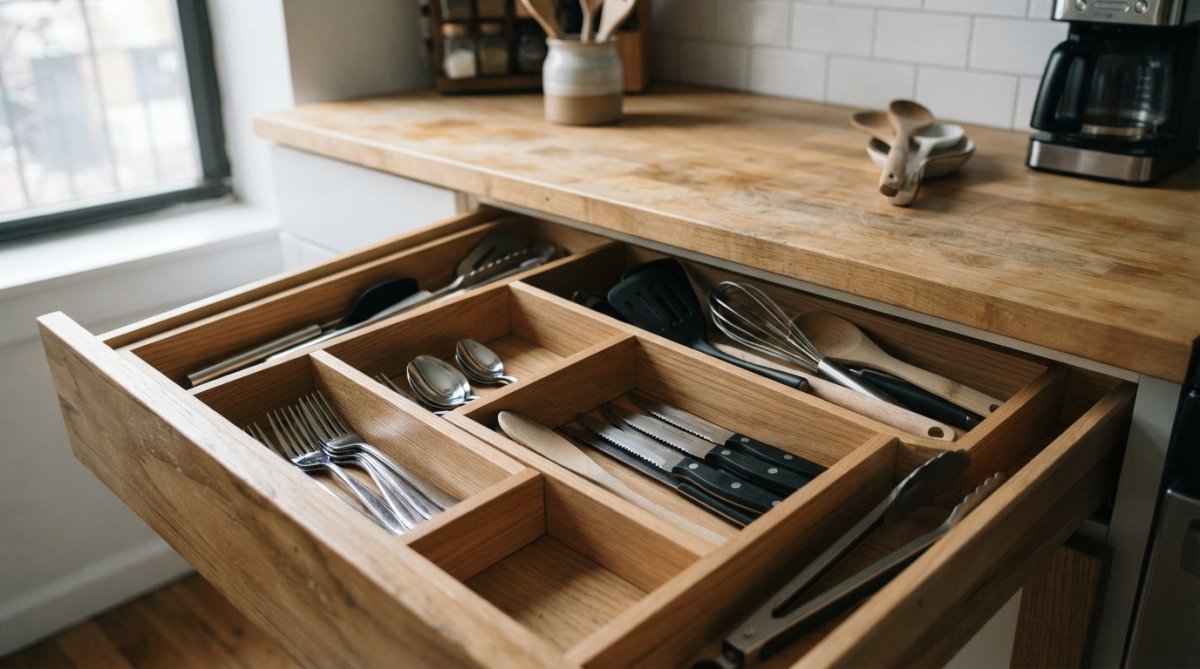
Step 5: Small Kitchen Storage Ideas for Countertops and Drawers
Countertops in small kitchens should be nearly empty except for daily-use items. Everything else lives in drawers, cabinets, or wall-mounted storage.
Drawer Dividers and Organization
Drawer dividers transform chaotic junk drawers into organized zones. Adjustable dividers let you customize the layout to match what you actually store. Vertical dividers work well for organizing baking sheets and cutting boards, stand them upright instead of stacking them flat. Drawer organizers with multiple compartments keep small items like rubber bands and twist ties corralled.
Countertop Space Management
If it doesn't get used daily, it doesn't live on the counter. Your coffee maker, toaster, and utensil holder are exceptions. Everything else, blender, food processor, stand mixer, lives in a cabinet or closet. When you do need to place something on the counter, use vertical space. A narrow rolling cart that fits in a corner provides additional storage without taking up permanent real estate.
Step 6: Budget-Conscious Storage Solutions for Small Kitchens
Organizing a small apartment kitchen doesn't require expensive systems. Simple, affordable solutions often work better than elaborate setups.
DIY Organization and Affordable Cabinet Organizers
Cardboard dividers cost almost nothing and work surprisingly well for organizing cabinets. Mason jars and repurposed containers work beautifully for organizing dry goods, transfer flour, sugar, pasta, and rice into clear jars with labels. Tension rods cost $5-15 and solve multiple problems.
Lazy Susans and Magnetic Strips
Lazy susans cost $10-20 and provide enormous functionality. Rotate them to access items in the back without reaching. Magnetic strips mounted on the wall hold knives and metal measuring spoons for $8-15 and free up significant drawer space. Dollar stores and discount retailers carry organization supplies at 30-50% lower prices than specialty home goods stores.
Common Mistakes to Avoid When Organizing Small Apartment Kitchens
Buying storage before decluttering. You end up with beautiful bins full of items you don't use. Declutter first, then buy storage solutions that fit your actual needs.
Choosing aesthetics over function. A beautiful storage system that doesn't work is useless. Prioritize accessibility and usability.
Ignoring vertical space. Many people organize horizontally and run out of room. Small kitchens demand vertical thinking.
Overstuffing cabinets and drawers. If you can't easily access items without disturbing everything else, you've overstuffed. Leave breathing room.
Not labeling containers. Labels prevent confusion and help you use your system consistently.
Using permanent solutions in a rental. Stick with damage-free options. They work just as well and give you flexibility when you move.
Keeping items "just in case." If you haven't used something in a year, you probably don't need it.
Small apartment kitchens work best when you embrace constraints rather than fight them. The space forces intentionality, you can't keep items mindlessly because there's nowhere to hide clutter. This actually becomes an advantage once you accept it.
Uniq Trenz offers a curated collection of compact, high-quality storage solutions specifically designed for small spaces. From stackable containers to space-saving organizers, our trending home essentials deliver the functionality you need without requiring permanent installation. START SHOPPING and transform your apartment kitchen into a space where everything has its place and cooking feels effortless rather than frustrating.
Frequently Asked Questions
How do I organize small apartment kitchen cabinets without drilling holes?
Use tension rods to create dividers for baking sheets and cutting boards, install over-the-door racks, and add stackable shelf risers inside cabinets. Adhesive hooks on cabinet doors hold small items like dish towels or measuring spoons. These rental-friendly solutions require no drilling and are completely removable, making them ideal for apartment living without damaging walls or cabinetry.
What should I declutter first in a small kitchen?
Start by removing duplicate items, multiple can openers, measuring cups, or wooden spoons. Next, purge expired pantry items and broken appliances. Then evaluate small appliances you rarely use. Focus on items taking up valuable countertop or cabinet space that don't serve your daily kitchen workflow. This decluttering approach frees up space for functional storage solutions while keeping your kitchen aesthetically clean and organized.
What are the best small kitchen storage ideas for under-sink organization?
Use stackable containers and bins to organize cleaning supplies vertically. Install a tension rod to hang spray bottles, freeing shelf space. Place a pull-out drawer organizer under the sink to maximize hard-to-reach areas. Keep frequently used items at eye level and store less-used supplies toward the back. This under-sink organization approach prevents wasted space and makes cleaning supplies easily accessible while maintaining visual order in your small kitchen.
How can I maintain an organized small apartment kitchen long-term?
Establish a 'one in, one out' rule when buying new kitchen items. Schedule a quick 10-minute weekly tidy-up to return items to designated spots. Use clear, labeled storage bins so everything has a home. Regularly assess whether items still fit your kitchen workflow and lifestyle. By maintaining these habits, your small kitchen stays functional and organized without requiring major reorganization efforts, making daily cooking more efficient and stress-free.
This article was written using GrandRanker