

How to Decorate a Small Living Room: 7 Practical Steps
Table of Contents
- Step 1: Plan Your Small Living Room Furniture Layout
- Step 2: Choose a Color Palette That Expands Your Space
- Step 3: Add Vertical Storage and Space-Saving Solutions
- Step 4: How to Arrange Furniture in an Awkward Living Room
- Step 5: Use Mirrors and Lighting to Create Depth
- Step 6: Select Multi-Functional Furniture and Décor
- Step 7: Declutter and Define Your Space's Purpose
- Common Small Living Room Mistakes to Avoid
Last Updated: August 26, 2026
How to decorate a small living room doesn't have to mean sacrificing style or comfort. Whether you're working with a studio apartment, a starter home, or a compact urban space, the right approach transforms even the tightest footprint into a room that feels intentional, inviting, and genuinely livable. At Uniq Trenz, we offer a diverse and curated selection of trending lifestyle, home, and personal style essentials to help customers optimize their small spaces with smart furniture choices, strategic lighting, and design principles that actually work in real apartments.
The challenge with small living rooms isn't the size; it's the approach. Most people treat decorating a small living room as a problem to solve rather than an opportunity to design intentionally. This guide walks you through seven practical steps that address real constraints: limited floor space, awkward layouts, natural light limitations, and the need for functionality without clutter.
Step 1: Plan Your Small Living Room Furniture Layout
Your furniture layout determines everything else. Before buying a single piece, measure your room in feet, mark where windows and doors sit, and note any architectural quirks. The most common mistake is crowding furniture toward the center of the room. Instead, anchor one or two key pieces (usually the sofa) against a wall to create immediate visual breathing room.
Consider traffic flow as you plan. People need to move from the entry to other rooms without navigating around furniture. A clear path makes the space feel larger and more functional. In truly small spaces, pushing furniture against walls works better than floating pieces, which can break up the floor into awkward fragments.
Identify your focal point, a window with natural light, a fireplace, a feature wall, or a large mirror. Arrange your seating to face it. If your room lacks a natural focal point, create one with art, a floating shelf, or a textural accent wall. Sketch a simple floor plan on paper or use a free tool to visualize furniture placement before committing.
Step 2: Choose a Color Palette That Expands Your Space
Light colors reflect light and create openness. Warm neutrals, soft whites, creams, and warm grays are safe choices that make space feel airy without sacrificing personality.
The key is understanding visual weight. Dark colors absorb light and make walls feel closer; light colors push walls back visually. Use light colors as your base (walls, large furniture) and introduce deeper tones through accents, throw pillows, artwork, or a single accent wall. Avoid more than three main colors in a small space; they fragment the visual field and feel chaotic.
Test paint samples on your walls and observe them at different times of day before committing. The same color reads completely differently under natural versus artificial light.
Step 3: Add Vertical Storage and Space-Saving Solutions
Floor space is your most precious resource. Walls are essentially free real estate for storage and display. Install floating shelves above your sofa, beside a window, or along empty walls. Tall, narrow bookcases work better than wide, squat furniture because they draw the eye upward and create a sense of height.
Consider Uniq Trenz's Vertical Hanging Garden Flower Pots ($24.99) as both storage and décor. These wall-mounted planters add greenery without taking up table or floor space. Ottomans with hidden storage provide seating while storing blankets, magazines, or seasonal items inside. Wall hooks, pegboards, and hanging organizers handle coats, bags, and small items. Every vertical inch counts in how to decorate a small living room.
Step 4: How to Arrange Furniture in an Awkward Living Room
Not every room is a simple rectangle. Some have sloped ceilings, odd corners, or doorways that interrupt wall space. Don't fight the architecture, use it. An alcove is a built-in focal point; place a chair, plant, or reading nook there. If a corner juts out awkwardly, position a tall plant or narrow shelf unit to make it feel intentional.
For rooms with multiple doorways, create a clear traffic lane between entries. Angle your seating to acknowledge the flow without blocking it. If your room is L-shaped, treat each section as a separate zone with an area rug defining each visually.
Measure twice before moving heavy pieces. In small rooms with unusual layouts, every inch matters.
Step 5: Use Mirrors and Lighting to Create Depth
Mirrors are the secret weapon of small space design. A well-placed mirror reflects light and creates the illusion of depth. Place a large mirror opposite a window to bounce natural light around the room. Position a mirror across from a focal point to amplify its visual impact.
Lighting is equally important. Layer your lighting with three types: ambient (overhead or recessed lights), task (reading lamp or desk light), and accent (wall sconces or decorative lamp). Avoid heavy floor lamps that consume floor space. Use wall-mounted sconces, pendant lights, or small table lamps on narrow side tables instead.
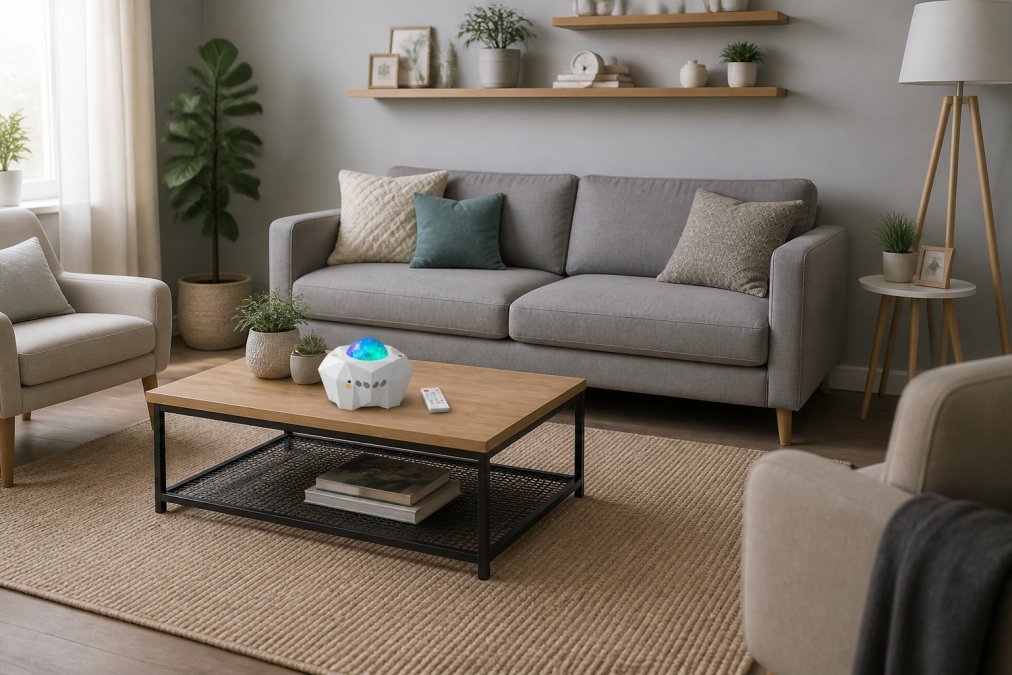
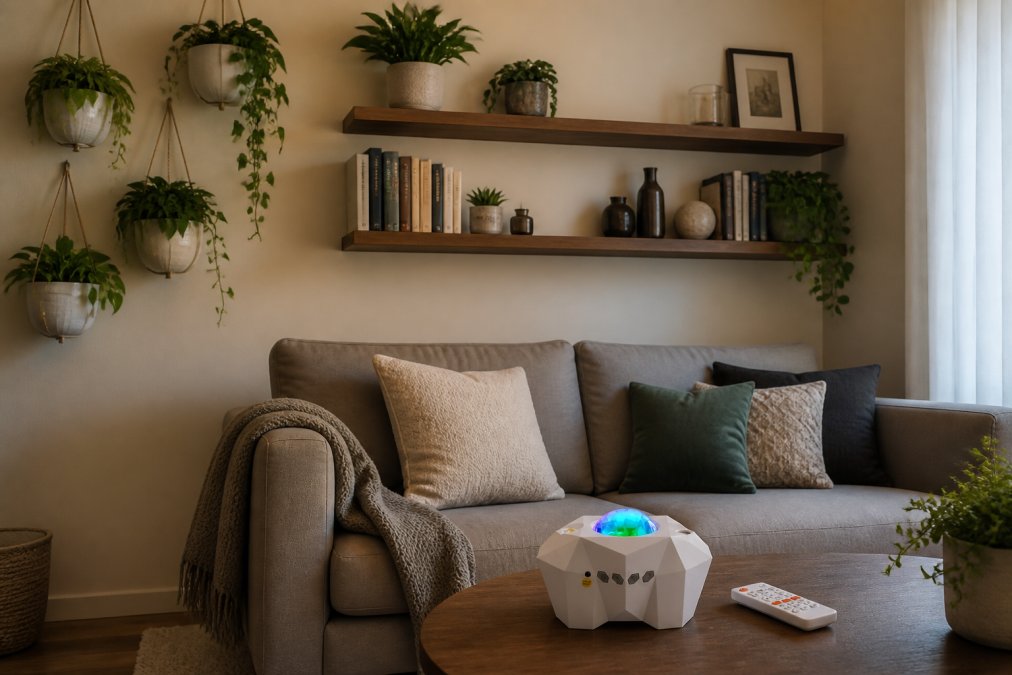
The Northern Lights Star Projector ($89.99) from Uniq Trenz serves double duty as a functional light source and decorative focal point. Light-colored lampshades diffuse light more effectively than dark ones. Sheer curtains allow natural light to flood in while maintaining privacy.
Step 6: Select Multi-Functional Furniture and Décor
In a small living room, every piece of furniture should earn its place. A sofa with storage underneath, a coffee table that lifts to become a workspace, a console table that doubles as a desk, or a bookshelf that divides space while providing storage, these pieces solve problems without multiplying them.
Nesting tables are ideal for small spaces; they stack when you need floor space and separate when you need multiple surfaces. A storage bench works as seating, storage, and a visual anchor. Choose a sofa silhouette carefully, compact loveseats or apartment-scale sofas (typically 72-78 inches) fit better than sectionals. Furniture with exposed legs creates visual lightness.
Textiles like throw blankets and pillows add comfort without consuming much space. The Blue & White Plaid Flannel Blanket ($38.15) and Round Pizza Blanket ($46.41) from Uniq Trenz are compact, stylish pieces that add warmth and visual interest. A few well-chosen décor pieces create more impact than numerous small items scattered around.
Step 7: Declutter and Define Your Space's Purpose
A small living room must be ruthlessly functional. Every item should serve a purpose or bring genuine joy. Clutter makes small spaces feel smaller; minimalism makes them feel intentional.
Define your space's primary purpose. Is this a living room where you watch TV and entertain? A workspace that also functions as a seating area? Once you know the primary purpose, design around it. Create zones even in a single-purpose room using an area rug to define your seating area visually.
Storage is the backbone of minimalism in small spaces. Everything you own needs a home. Baskets under side tables, shelves for books, and wall-mounted organizers keep surfaces clear. Rotate seasonal décor and items to keep your space feeling fresh without requiring more purchases.
Common Small Living Room Mistakes to Avoid
Understanding what doesn't work is as valuable as knowing what does.
Oversized furniture overwhelms a small living room. Measure your space carefully and choose furniture scaled appropriately. Too many colors and patterns fragment the visual field. Stick to a cohesive color palette with one or two accent colors. Poor lighting makes small rooms feel darker and smaller. Layer your lighting and use warm-toned bulbs. Ignoring traffic flow turns a small room into an obstacle course. Always prioritize clear pathways. Wasting wall space is a missed opportunity. Use vertical storage, floating shelves, mirrors, and wall-mounted décor. Dark colors throughout absorb light and make walls feel closer. Balance dark accents with light base colors. Neglecting scale and proportion creates visual discord. Choose pieces that relate proportionally to your walls and furniture.
| Mistake | Impact | Solution |
|---|---|---|
| Oversized furniture | Takes up too much floor space, creates visual heaviness | Choose scaled-down pieces; measure before buying |
| Too many colors/patterns | Fragments visual field, feels chaotic | Limit to 3 main colors, 1-2 patterns |
| Poor lighting | Makes space feel dark, uninviting | Layer lighting; use warm-toned bulbs |
| Blocked traffic flow | Forces navigation around furniture, feels cramped | Keep pathways clear between entries |
| Unused wall space | Misses storage and display opportunities | Install shelves, mirrors, wall-mounted storage |
| Dark color palette | Absorbs light, walls feel closer | Balance with light base colors, dark accents |
| Ignored scale/proportion | Visual discord, feels disjointed | Match art and furniture size to wall dimensions |
Decorating a small living room is about working with your space rather than against it. Strategic furniture placement, thoughtful color choices, vertical storage, and intentional lighting apply whether your room is 150 or 250 square feet. The goal is to make it feel purposeful, functional, and genuinely livable.
Start with your floor plan. Measure, sketch, and visualize before moving furniture. Choose a light color palette with strategic accents. Use every vertical inch for storage and display. Add mirrors and layered lighting. Select pieces that serve multiple purposes. Keep only what you love or use. The result is a small living room that feels intentional, comfortable, and distinctly yours.
At Uniq Trenz, we stock compact, high-quality décor and storage solutions designed for real living spaces. From the Vertical Hanging Garden Flower Pots that transform bare walls into living displays to cozy blankets that add texture without clutter, each piece is chosen for both function and design.
Interior design principles for small spaces emphasize that thoughtful planning and strategic use of vertical space are foundational to making compact rooms work. Color theory and spatial perception confirms that light colors genuinely expand the perception of space through how human vision processes light reflection. Furniture scale and proportion guidelines provide the professional standards that guide how designers match furniture size to room dimensions.
START SHOPPING to find everything you need to transform your small living room into a space that works as hard as it looks good.
Frequently Asked Questions
What is the 3-5-7 rule in decorating a small living room?
The 3-5-7 rule is a design principle for balancing visual elements: use 3 main colors, 5 key furniture pieces, and 7 accent items. This prevents overcrowding while maintaining interest. In a small living room, this rule helps you stay intentional about each piece you add, ensuring nothing feels cramped or cluttered. Apply it by selecting your sofa, coffee table, and shelving as core pieces, then layer in accent pillows, artwork, and plants strategically.
How can I add storage to a small living room without creating clutter?
Vertical storage is your best strategy. Wall-mounted shelving, floating units, and hanging solutions like the Vertical Hanging Garden Flower Pots ($24.99) maximize space without consuming floor area. Use ottomans with hidden storage, under-sofa baskets, and corner shelving to capture dead space. Keep items organized by category, use matching containers, and display only what you use regularly. This approach maintains visual calm while solving storage challenges.
What colors make a small living room look bigger?
Light, neutral colors expand perceived space: whites, creams, soft grays, and pale blues reflect light and create airiness. Pair neutrals with one accent color to add personality without overwhelming the room. Avoid dark colors on walls, which can make spaces feel smaller. Use color strategically on accent pieces, throw pillows, or artwork rather than large furniture. A Blue & White Plaid Flannel Blanket ($38.15) can add warmth while keeping the palette open and cohesive.
How do I arrange furniture in a small living room to maximize traffic flow?
Start by identifying your room's natural focal point, a window, fireplace, or TV. Keep pathways clear and aim for a furniture arrangement that allows comfortable movement. Leave at least 18 inches of walking space between pieces. This layout makes the room feel intentional and larger while ensuring you can move comfortably through the space.
This article was written using GrandRanker