

Best Painless Hair Removal Tools 2026
Table of Contents
- Best Painless Hair Removal Tools at a Glance
- Understanding IPL vs. Laser Technology
- At-Home Laser Hair Removal Safety
- How to Use IPL Devices Painlessly
- Painless Hair Removal for Sensitive Skin
- Best Crystal Hair Eraser Reviews and Alternatives
- Long-Term Maintenance Costs and Sustainability
- Conclusion
Last Updated: August 6, 2026
Best Painless Hair Removal Tools at a Glance
Modern painless hair removal tools have transformed grooming from a dreaded chore into a quick, comfortable process. Advanced technology, cooling systems, adaptive sensors, and light-based treatments, now makes pain-free hair removal genuinely achievable for facial fuzz, bikini lines, and full-body coverage.
At Uniq Trenz, we've curated a selection of effective painless hair removal devices, each designed to deliver smooth skin without the sting.
Quick Picks:
- Best Overall: Ulike Sapphire Air 3 IPL Hair Removal Device, sapphire ice-cooling keeps skin at 65°F for genuinely painless treatment
- Best for Sensitive Skin: Braun Silk-expert Pro 5, adaptive sensor adjusts intensity to your skin tone automatically
- Best Budget Option: Nood The Flasher 2.0, permanent hair reduction at under $200
- Best Premium Choice: Philips Lumea IPL 9000 Series, personalized treatment with curved attachments for every body area
Understanding IPL vs. Laser Technology
Intense pulsed light (IPL) technology and laser hair removal both target melanin in hair follicles but differ in approach. IPL devices emit broad-spectrum light across multiple wavelengths, covering larger treatment areas with less concentrated energy. Laser systems use a single, highly focused wavelength that penetrates deeper with more precision.
For at-home use, IPL dominates because it's safer, more forgiving on different skin tones, and requires less technical expertise. The broader light spectrum means fewer settings to adjust, making IPL more user-friendly. Laser systems, while potentially more powerful, require careful calibration and carry higher burn risks if used incorrectly at home.
IPL spreads energy across a wider area, resulting in a gentler sensation, many describe it as a warm snap rather than a sharp sting. Modern IPL devices with sapphire ice-cooling technology have nearly eliminated discomfort by maintaining skin contact temperature around 65°F throughout treatment.
Both technologies work best during the anagen phase, when hair actively grows and contains the most melanin. Most devices require treatments every 2-4 weeks for 6-8 weeks before results plateau. Expect visible results in 3-4 weeks, with maximum reduction after 8-12 weeks of consistent use.
At-Home Laser Hair Removal Safety
Safety with at-home hair removal devices requires understanding that you're using light energy to damage hair follicles. FDA-cleared devices like the Ulike Sapphire Air 3 and Braun Silk-expert Pro 5 have undergone testing to confirm safety when used as directed.
The biggest safety concern is skin damage from excessive heat. Cooling technology matters significantly, devices that maintain lower skin contact temperatures reduce burn risk, especially for darker skin tones or sensitive skin. Sapphire cooling actively pulls heat away while the light pulse is delivered, making treatment genuinely painless.
Never use these devices on:
- Tattooed areas (ink absorbs light and can burn)
- Active acne, open wounds, or inflamed skin
- Very dark skin tones with non-adaptive devices
- Recent sunburn
- Skin using retinoids or photosensitizing medications
Dermatologist-tested devices like the Philips Lumea IPL 9000 Series include safety guards and skin tone sensors. The SenseIQ technology reads your skin and adjusts intensity automatically, making at-home treatment far safer than it was five years ago.
Treatment frequency also affects safety. Using a device more than recommended won't speed results, only increases burn risk. Hair follicles need time to enter the anagen phase before the next treatment becomes effective. Most devices recommend 2-4 week intervals initially, then monthly maintenance once hair growth slows.
How to Use IPL Devices Painlessly
The difference between painful and painless IPL treatment often comes down to technique and device selection. Starting with a device designed for comfort, one with active cooling like the Ulike Sapphire Air 3, eliminates most discomfort immediately.
Begin with the lowest intensity setting, even if you have darker hair. This lets you test your skin's response and ensures comfort that encourages consistent treatment. You can increase intensity in future sessions once confident your skin tolerates it well.
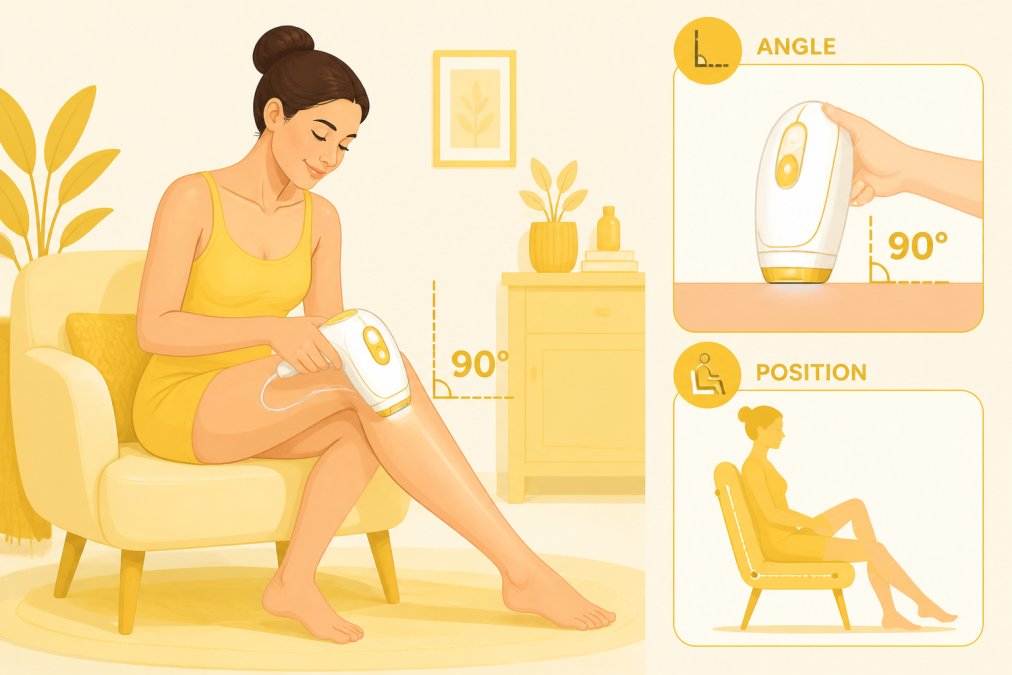
Prepare skin by shaving the area, never wax or pluck beforehand, since the device needs hair beneath the skin surface. Clean skin is important; lotions, oils, or sunscreen interfere with light delivery. Some devices include pre-treatment gel that improves light contact and reduces discomfort.
During treatment, hold the device perpendicular to skin and move slowly across the area. Rushing increases discomfort because the cooling system can't work effectively. Devices with auto-glide mode handle this automatically, making treatment faster and more comfortable.
The sensation feels like a warm snap or gentle pinch, nothing like waxing pain. If you experience actual pain, stop immediately, it signals intensity is too high, cooling isn't working, or your skin isn't suitable for that device.
After treatment, avoid sun exposure for 24 hours and skip hot baths, saunas, or intense exercise for a few hours. Most people see no visible reaction, though some experience mild redness that fades within hours.
Painless Hair Removal for Sensitive Skin
Sensitive skin requires adaptive technology to prevent reactions, redness, irritation, or hyperpigmentation. The Braun Silk-expert Pro 5 excels because its SensoAdapt technology continuously reads your skin tone and adjusts flash intensity automatically, preventing over-treatment that causes irritation.
For facial hair removal on sensitive skin, intensity matters most. Your face has thinner, more delicate skin prone to irritation. Devices with precision heads designed for facial use, like those in the Braun and Philips systems, deliver smaller treatment windows for better control. The Philips Lumea IPL 9000 Series includes a dedicated facial attachment optimized for safety on delicate areas.
If your skin reacts to fragrance, sulfates, or certain preservatives, avoid pre-treatment gels containing these ingredients. The Ulike Sapphire Air 3 requires no gel, relying on cooling technology, making it ideal for chemically sensitive skin. Always patch test new products on a small area first.
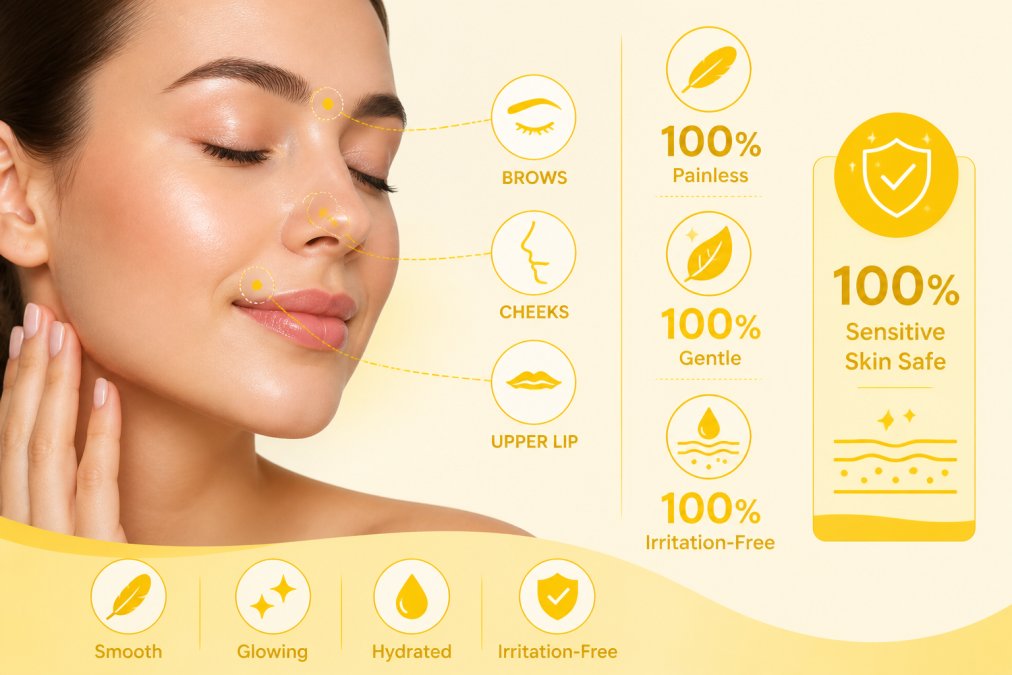
Ingrown hair prevention becomes important for sensitive skin. Regular exfoliation between treatments helps; gentle chemical exfoliants with lactic or glycolic acid work better than harsh scrubs on reactive skin. Using the device less frequently (every 3-4 weeks instead of every 2 weeks) while maintaining results reduces overall irritation.
Expect results in 4-6 weeks rather than 3, with maximum hair reduction after 10-12 weeks. This slower pace is safer, giving your skin barrier time to recover between sessions.
Best Crystal Hair Eraser Reviews and Alternatives
Crystal hair erasers use a specialized crystal surface that mechanically removes hair and dead skin cells when rubbed gently across skin. The result combines exfoliation with hair removal, leaving skin smoother than shaving alone.
The appeal is simplicity, no batteries, charging, intensity settings, or learning curve. You wet the area, rub the crystal surface in circular motions, and you're done. There's no pain, just mild abrasive sensation similar to gentle exfoliation. This makes them ideal for people intimidated by IPL devices or wanting backup tools for maintenance between treatments.
The limitation is effectiveness on coarse hair. Crystal erasers work best on fine to medium hair and peach fuzz. For thick leg or dense bikini hair, they remove surface hair but don't target the follicle, so regrowth happens within days rather than weeks. They supplement rather than replace IPL or laser for serious hair removal.
For sensitive skin, crystal erasers are genuinely gentle, no heat, light energy, or chemicals, just mechanical action. They work equally on all skin tones since they don't rely on melanin targeting.
Many users combine approaches: IPL every 2-4 weeks for permanent reduction, then crystal erasers for quick maintenance between treatments or peach fuzz removal on the face.
Long-Term Maintenance Costs and Sustainability
The real cost of painless hair removal isn't upfront device price, it's long-term commitment. IPL and laser devices require ongoing use to maintain results. Most people reach maximum hair reduction after 8-12 weeks, then need monthly maintenance indefinitely.
A device like the Nood The Flasher 2.0 costs around $179-$199 upfront with a lifetime warranty, though bulb replacement typically costs $50-$100. The Ulike Sapphire Air 3 costs approximately $329 with unlimited flashes in most models, making long-term maintenance purely time-based.
Compare this to professional laser treatments at $150-$300 per session requiring the same 8-12 week protocol, then monthly maintenance. Over a year, professional treatments easily exceed $1,500, while at-home devices cost $200-$600 upfront with minimal ongoing expense.
Quality devices like the Braun Silk-expert Pro 5 and Philips Lumea systems last 5-10 years with proper care. Cheaper alternatives may fail within 2-3 years, creating e-waste. Uniq Trenz offers devices selected for durability, ensuring your investment lasts.
The most sustainable approach combines strategies: use IPL for initial hair reduction, maintain with a crystal eraser for quick touch-ups, and skip expensive salon visits. This reduces both long-term costs and environmental footprint compared to repeated professional treatments.
Conclusion
Painless hair removal is now the standard with modern devices. The Ulike Sapphire Air 3 leads for comfort, the Braun Silk-expert Pro 5 excels for skin tone adaptation, and the Philips Lumea IPL 9000 Series offers premium features. Each represents the best painless hair removal tools 2026 has to offer, backed by FDA clearance and dermatologist testing.
Choose a device matched to your skin type, hair color, and commitment level. Sensitive skin needs adaptive technology. Darker skin tones need devices tested on melanin-rich skin. Budget-conscious buyers should consider the Nood The Flasher 2.0.
At Uniq Trenz, we stock a wide range of painless hair removal devices, each selected for quality, durability, and genuine comfort. Combine any of these devices with proper technique, starting low, moving slow, and maintaining consistency, and you'll achieve smooth, hair-free skin without pain.
START SHOPPING at Uniq Trenz and discover the painless hair removal tool that fits your routine, your skin, and your budget.
| Device | Starting Price | Best For | Cooling Technology | Skin Tone Compatibility |
|---|---|---|---|---|
| Ulike Sapphire Air 3 | ~$329 | Comfort-focused users | Sapphire ice-cooling (65°F) | Most skin tones |
| Braun Silk-expert Pro 5 | $270-$450 | Adaptive treatment needs | Integrated cooling | Adaptive sensor adjusts to your tone |
| Nood The Flasher 2.0 | $179-$199 | Budget-conscious buyers | Standard cooling | Most skin tones |
| Philips Lumea IPL 9000 | $450-$600 | Premium, full-body coverage | Integrated cooling | Dermatologist-tested |
| Silk'n Infinity Fast | ~$419 | Fast treatment seekers | eHPL technology cooling | Most skin tones |
Frequently Asked Questions
What is the best painless hair removal tool for home use?
IPL devices like the Ulike Sapphire Air 3 and Braun Silk-expert Pro 5 are among the most effective painless hair removal tools available for home use. These devices use intense pulsed light technology with cooling systems that keep skin comfortable during treatment. The Ulike maintains skin temperature around 65°F, while the Braun adapts intensity to your skin tone automatically. Results typically appear within three weeks, with full effectiveness after 6-8 weeks of regular use.
Does at-home laser hair removal hurt?
Modern at-home IPL and laser devices are designed to minimize discomfort. Most users report little to no pain, especially with cooling technology. The sensation is often described as a light snapping feeling. Devices with adjustable intensity settings let you start low and increase gradually. Applying the device to clean, dry skin and avoiding sun exposure before treatment also reduces any discomfort. If you have sensitive skin, begin with the lowest intensity setting.
What is the best painless hair removal method for sensitive skin?
For sensitive skin, look for IPL devices with adaptive skin tone sensors and multiple intensity levels, like the Braun Silk-expert Pro 5 with its SensoAdapt technology. Natural waxing options like Nad's Sugar Wax Kit are also gentle and hypoallergenic. These methods avoid harsh chemicals and heat. Always do a patch test first, use products labeled hypoallergenic and dermatologist-tested, and avoid treatment immediately after sun exposure or on irritated skin.
How long do results from painless hair removal tools last?
IPL devices deliver long-lasting results, typically keeping skin smooth for 3-6 months after completing a treatment cycle. Most users need maintenance sessions every 4-8 weeks initially, then less frequently as hair regrowth slows. Sugar waxing results last 3-6 weeks, with hair becoming finer over time with repeated use. Consistency matters: regular treatments during the anagen phase of hair growth cycles produce the best long-term results and reduce overall maintenance needs.
This article was written using GrandRanker