

Affordable Sustainable Home Decor: Budget Alternatives
Table of Contents
- Why Sustainable Home Decor Costs So Much (And How to Avoid It)
- Best Sustainable Materials for Home Decor Without the Premium Price
- DIY Sustainable Home Decor Projects That Save Money
- How to Shop for Ethical Home Goods on a Budget
- Affordable Eco-Friendly Alternatives to Luxury Brands
- Building a Sustainable Home on a Real Budget
- Conclusion
Last Updated: August 28, 2026
Why Sustainable Home Decor Costs So Much (And How to Avoid It)
Sustainable home decor prices have skyrocketed alongside market growth. A reclaimed wood side table costs $400+, organic cotton throw pillows run $80 each, and vintage mirrors command premium markups. The issue isn't the materials themselves, it's the markup layers, retail middlemen, and premium branding that position eco-conscious decor as luxury. At Uniq Trenz, we've curated alternatives proving you can build a genuinely sustainable home without luxury pricing. The strategies below show how to source, DIY, and shop your way to ethical decor at a fraction of designer costs.
Sustainable home decor budget options exist at every price point. Whether you're working with $50 or $500, concrete ways exist to fill your space with eco-friendly pieces that last. Below, we'll show you how to find reclaimed materials, upcycle what you own, navigate second-hand marketplaces, and spot genuine sustainability versus greenwashing.
Best Sustainable Materials for Home Decor Without the Premium Price
Reclaimed Wood and Upcycled Furniture
Reclaimed wood is the gold standard for sustainable decor on a budget. You're paying for labor, milling, and finishing, not the material itself. When you buy through mainstream retailers, you pay labor plus retail markup, shipping, and profit margin. That's where the price spike happens.
Source reclaimed wood directly from salvage yards, architectural salvage shops, and deconstruction companies. A reclaimed wood plank that becomes a $300 floating shelf at a design boutique might cost $20-$40 at a salvage yard (fsc.org). Sand, stain, and mount it yourself, and you've saved 80 percent.
Upcycled furniture works the same way. A thrifted wooden dresser costs $30-$60. Add $15 worth of paint or stain, spend four hours refinishing, and you have a one-of-a-kind piece costing less than new particle-board. The environmental benefit is real: you've kept waste from landfills and extended a solid wood piece's life by decades. Reclaimed and vintage furniture outlasts fast-furniture by years, cutting your true cost per year dramatically.
Natural Fibers and Organic Cotton
Natural fibers, cotton, linen, hemp, jute, meet sustainability with affordability. "Organic" certification adds cost, but you don't need every textile certified. Prioritize organic cotton for items touching your skin: throw pillows, blankets, bed linens. For wall hangings, rugs, and storage baskets, standard natural fibers deliver sustainability without the premium. A jute storage basket costs $15-$25 and lasts years. Organic cotton throw blankets run $40-$60 retail, but second-hand marketplaces often have them for $20-$30.
Natural fibers biodegrade in landfills; synthetics don't (the EPA). A $25 linen curtain lasting five years then biodegrading is more sustainable than a $15 polyester curtain lasting two years then sitting in a landfill for 200 years. When you factor replacement cycles, natural fibers win on budget and environmental impact.
Recycled Glass and Biodegradable Options
Recycled glass appears in vases, bowls, candle holders, and light fixtures. It's durable, beautiful, and genuinely sustainable, glass recycles infinitely without quality loss. Recycled glass costs less to produce than virgin glass, yet retail markup still applies. A recycled glass vase costing $8 to make might sell for $35 at a boutique.
Biodegradable options include cork trivets, natural rubber placemats, and plant-based resin pieces. These break down after use, eliminating landfill problems. A cork coaster set costs $12-$18 retail but $6-$10 through discount stores or direct makers.
Mix statement pieces with budget-friendly accents. Pair one recycled glass vase or biodegradable planter with natural fiber accents for intentional, sustainable style without premium spending.
DIY Sustainable Home Decor Projects That Save Money
Upcycling Furniture and Textiles
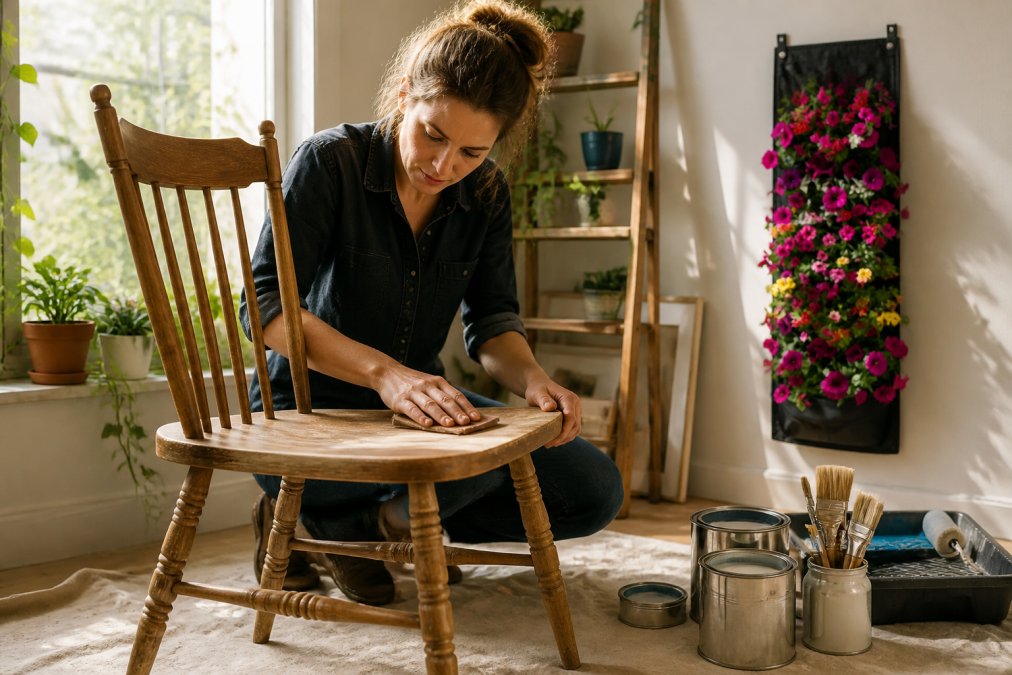
Upcycling transforms items you own into fresh pieces. Material cost is zero; time investment is real, but savings are dramatic. A wooden chair from your closet or thrift store costs nothing. Paint, reupholster, or refinish it, and you've created a custom piece worth $200-$400 from a designer.
Textile upcycling is equally powerful. Old cotton sheets become throw pillow covers. Worn jeans transform into patchwork wall hangings or storage pouches. A faded linen tablecloth becomes napkins or wall tapestries. You divert textiles from landfills and create new items without consuming virgin materials.
Start with solid base materials. A well-made wooden dresser with good bones deserves refinishing. A thrifted sofa frame in decent condition deserves new upholstery. Target structurally sound but aesthetically dated items, that's where upcycling delivers maximum return.
Creating Decor From Thrifted Finds
Thrifting works on discovery, not transformation. A thrifted mirror in good condition costs $5-$15; retail versions run $40-$80. Vintage glassware, candlesticks, or bowls cost $2-$5 per item at thrift stores versus $15-$30 retail.
Thrifted items are second-hand, so they've completed their primary use cycle. Buying them extends life and prevents discard. Build your decor gradually. Visit thrift stores regularly, follow local buy-sell-trade groups, and stay flexible. A thrifted frame that's the wrong color becomes perfect after spray paint. A dated mirror looks fresh with new backing.
Growing Your Own Green Decor
Living plants are the most affordable sustainable decor available. A small potted plant costs $3-$8 and provides genuine environmental benefits: improved air quality, added oxygen, and biophilic design (peer-reviewed research). They last indefinitely with basic care, making them the most cost-effective investment.
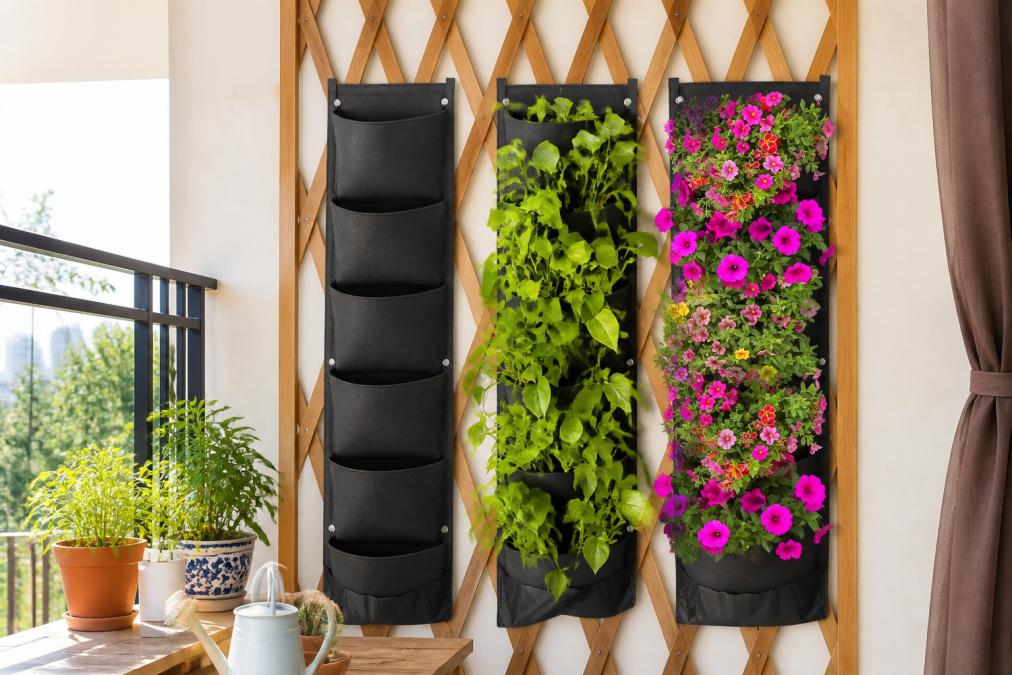
Vertical gardening maximizes impact in small spaces. Hanging planters, wall-mounted pockets, and tiered stands create visual interest without consuming floor space. Uniq Trenz offers Vertical Hanging Garden Flower Pots for $24.99, letting you grow herbs, succulents, or flowers on any wall. One vertical garden provides the visual impact of five traditional pots at a fraction of cost and space.
Propagating plants from cuttings is free decor creation. Take a cutting, root it in water, transfer to soil, and within weeks you have a new plant. Herbs like basil and mint propagate easily. Succulents multiply through leaf propagation. Turn one plant into dozens at zero cost.
How to Shop for Ethical Home Goods on a Budget
Spotting Greenwashing vs. Genuine Sustainability
Greenwashing uses words like "eco-friendly," "natural," or "sustainable" without third-party certification or measurable impact. It's marketing, not substance.
Genuine sustainability has specific markers. Look for third-party certifications: Fair Trade, GOTS (Global Organic Textile Standard), FSC (Forest Stewardship Council), or Cradle to Cradle. These require independent verification and ongoing compliance. Genuinely certified products have been audited by external standards bodies.
The second marker is transparency. Real sustainability companies provide detailed sourcing, manufacturing, labor, and environmental impact information. They name suppliers and acknowledge limitations. Greenwashed companies use vague language: "responsibly sourced," "eco-conscious," "environmentally friendly."
The third marker is consistency. A company claiming sustainability but selling products with excessive plastic packaging, non-recyclable materials, or questionable suppliers is greenwashing. Check the website, social media, and customer reviews. Real sustainability shows up everywhere; greenwashing stays confined to product descriptions.
Shopping Second-Hand Marketplaces
Facebook Marketplace, Craigslist, OfferUp, and Poshmark have home decor sections. Local Buy Nothing groups connect you with people giving away items free. These platforms let you find specific items rather than browsing randomly.
The advantage over thrift stores is selection and specificity. Search for "reclaimed wood shelf" or "organic cotton throw blanket" and find exactly what you need. Prices are often lower because sellers are motivated to move items quickly. Negotiation is possible, especially for larger purchases.
Set up saved searches for items you want. Check listings weekly. Be prepared to act quickly, popular items sell fast. Build relationships with repeat sellers; they'll often give you first notice of new inventory or better deals.
Supporting Small Artisans and Local Makers
Small-batch artisans often price work lower than mass-market retailers due to lower overhead and smaller marketing budgets. A handmade ceramic planter from a local potter costs $20-$40; big-box retailers charge $35-$60. Handmade versions are usually higher quality, more unique, and directly support small businesses.
Visit farmers markets, craft fairs, and open studio events. Follow local artisans on Instagram and Etsy. Join community groups focused on local shopping. Many makers offer email lists for new releases and exclusive deals.
Local production means lower transportation emissions. Artisanal manufacturing often uses ethical labor and sustainable materials by default. Handcrafted items typically last longer because makers take pride in their work. A handcrafted item lasting 20 years beats a $15 mass-market piece needing replacement in three years.
Affordable Eco-Friendly Alternatives to Luxury Brands
Handmade and Small-Batch Decor Options
Handmade decor doesn't require luxury pricing. Handmade woven baskets, ceramic vessels, and textiles cost 20-40 percent less when purchased directly from makers than through retail distribution.
Uniq Trenz carries curated handmade pieces like the Handmade Woven Yarn Sunflower Handbag for $72.75, doubling as decor accent or functional storage. The Striped Large Capacity Cotton Yarn Woven Tote Bag at $66.44 offers artisanal quality at a fraction of designer pricing.
Small-batch production naturally limits supply, maintaining quality. Makers can't cut corners like mass manufacturers because they produce limited quantities for direct customers. When you buy directly from makers or curated platforms, you capture most savings.
Durability and Longevity: Real Cost Savings
The most underrated aspect of sustainable decor shopping is durability. A $40 handmade wooden shelf lasting 15 years costs $2.67 per year. A $15 particle-board shelf needing replacement every three years costs $5 per year. The expensive option is actually cheaper over time.
Longevity is where sustainable materials shine. Reclaimed wood, solid wood furniture, natural fibers, and handcrafted pieces last. They're repairable, wooden shelves refinish, textiles mend, ceramics glue. Mass-produced decor is designed for replacement.
Calculate true cost by dividing purchase price by expected lifespan. A $100 piece lasting 10 years costs $10 per year. A $30 piece lasting two years costs $15 per year. Sustainable options win on both budget and environmental impact.
Building a Sustainable Home on a Real Budget
Start with one room or category. Focus on one area, bedroom, living room, or kitchen, and apply strategies systematically. Replace one fast-furniture piece with a thrifted or upcycled alternative. Add one vertical garden. Swap one throw pillow for organic cotton. Small, consistent changes compound into genuinely sustainable space without massive budgets.
Prioritize longevity. Before buying anything, ask: Will this last? Is it repairable? Can it be repurposed? If yes to all three, it's worth buying.
Mix price points strategically. You don't need every item handmade or premium. A $20 thrifted frame with a $5 print looks intentional. A $25 plant from Uniq Trenz's vertical garden system paired with $3 potted plants creates impact without premium spending. Combine budget basics with statement pieces for curated, sustainable style.
Support makers whenever possible. Direct relationships often lead to better pricing, custom options, and access to items unavailable retail. Follow local makers, join community groups, and build relationships with trusted sellers. Over time, these connections become your most reliable sustainable decor source at genuine budget prices.
Track spending and timeline. Set a monthly budget, $50, $100, whatever you can allocate. Over 12 months, that becomes real change. A $50 monthly budget becomes $600 per year, enough to transform multiple rooms.
Building a sustainable home doesn't require choosing between values and budget. The strategies above prove eco-conscious decor is accessible at every price point. Whether sourcing reclaimed materials, upcycling what you own, shopping second-hand, or supporting artisans, you have concrete ways to create beautiful, ethical space without luxury spending. Start with one room, prioritize durability, and let your sustainable home grow. Uniq Trenz makes it easy with curated options like Solar Powered Waterproof Vintage Light ($26.99) and Net Mesh Solar Fairy Lights ($27.99) that blend eco-friendly design with real affordability. Your space can reflect both your values and your budget.
| Strategy | Budget Range | Time Investment | Best For |
|---|---|---|---|
| Thrifting | $5-$40 per item | 2-4 hours per visit | Mirrors, frames, decorative objects |
| Upcycling | $10-$50 per project | 4-8 hours | Furniture, textiles, storage |
| DIY from scratch | $15-$60 per project | 6-10 hours | Custom pieces, wall art, planters |
| Second-hand marketplace | $10-$100 per item | 1-2 hours searching | Specific items, larger pieces |
| Small artisan direct | $20-$80 per item | Immediate purchase | Handmade ceramics, woven goods |
| Vertical gardening | $24-$45 setup | 1 hour | Space-saving green decor |
Frequently Asked Questions
What are some eco-friendly home decor ideas that don't break the bank?
Focus on natural materials like reclaimed wood, organic cotton, and recycled glass that cost less than premium sustainable brands. DIY upcycling projects, thrifted furniture finds, and growing indoor plants transform spaces affordably. Small-batch artisanal pieces from independent makers often cost less than luxury retailers while supporting ethical manufacturing. The Vertical Hanging Garden Flower Pots ($24.99) brings greenery without expensive installations, and solar-powered lights eliminate energy costs over time.
How do I identify truly sustainable home decor versus greenwashing?
Genuine sustainable decor specifies materials (reclaimed wood, organic cotton, recycled content), production methods, and certifications. Check for transparency about manufacturing practices and labor standards. Greenwashing uses vague terms like 'eco-friendly' without details. Ask sellers about material sourcing, durability (longevity reduces waste), and whether items are biodegradable or recyclable. Small artisans and local makers are easier to verify than large retailers making unsubstantiated claims.
Is upcycled furniture a viable alternative to luxury sustainable brands?
Absolutely. Upcycled furniture eliminates manufacturing waste, costs 50-70% less than new sustainable pieces, and often lasts longer due to solid vintage construction. Thrifted reclaimed wood items, refurbished textiles, and DIY-restored pieces deliver the same aesthetic and environmental benefit. The circular economy model reduces carbon footprint by keeping materials in use rather than producing new inventory. Handmade woven tote bags ($66.44) and similar artisanal pieces offer affordable alternatives without sacrificing ethical production.
What are the most durable eco-friendly materials for home interiors?
Reclaimed wood, organic cotton, bamboo, and recycled glass rank highest for durability and longevity. These materials withstand years of use, reducing replacement frequency and overall waste. Natural fibers like jute and linen age beautifully while remaining functional. Handmade items from small-batch producers often use time-tested construction methods that outlast mass-produced alternatives. Investing in durable sustainable materials saves money long-term because replacements happen less often, making the initial cost more economical.
This article was written using GrandRanker