

Table of Contents
- Why Entryway Organization Ideas Matter for Small Spaces
- Entryway Storage Without a Closet: Wall-Mounted Solutions
- Small Entryway Shoe Storage: Compact and Accessible
- Narrow Entryway Organization: Vertical and Slim Furniture
- DIY Entryway Organizer: Budget-Friendly Ideas You Can Build
- Keeping Your Entryway Clutter-Free: Maintenance Routines
- Frequently Asked Questions
Last Updated: October 10, 2026
Why Entryway Organization Ideas Matter for Small Spaces
A cluttered entryway sets the tone for the entire home. When shoes pile up by the door, coats drape over railings, and bags scatter across the floor, even a beautiful space feels chaotic. Affordable compact entryway organization ideas solve this problem without requiring a major renovation or expensive built-in storage. For renters and homeowners alike, thoughtful organization transforms a cramped entry into a functional, welcoming space.
Small entryways present a real challenge. Limited square footage means every inch counts, and the wrong storage solution wastes space instead of maximizing it. The key is choosing solutions that work vertically rather than horizontally, embrace compact furniture, and fit your actual lifestyle. This guide from Uniq Trenz breaks down practical, budget-friendly strategies that deliver real results.
Entryway Storage Without a Closet: Wall-Mounted Solutions
Wall-mounted storage is the foundation of any compact entryway organization plan. When floor space is scarce, vertical solutions become essential. Hooks, shelves, and pegboards transform blank walls into functional storage without consuming precious square footage.
Hooks: Spacing, Height, and Load Capacity
Coat hooks mounted at varying heights accommodate coats, bags, backpacks, and umbrellas. A single wall can hold 6-8 hooks depending on width, creating dedicated spots for each household member. The mistake most people make is installing hooks too close together.
For entryway organization, hook placement matters:
- Adult coats and bags: 60-66 inches from the floor
- Children's items: 36-48 inches from the floor
- Umbrellas and lightweight bags: 72 inches or higher
This tiered approach lets household members access their own items without reaching or climbing.
Pegboards and Flexible Shelving
Pegboards offer flexibility: pegs can be rearranged as needs change, and accessories like baskets and shelves attach easily. Wall-mounted shelves above a console table create a two-tier system that stores items both above and below eye level.
Renter-Friendly Installation: Damage-Free Methods
Renters and those avoiding wall damage have multiple options that secure items without permanent holes:
- Adhesive hooks: Hold up to 5 pounds per hook and remove cleanly from painted drywall. Test on a small, inconspicuous area first, and follow manufacturer instructions for removal to avoid paint damage.
- Removable shelving strips: Adhesive-backed metal strips mount shelves securely and peel away without residue. These work best on smooth, clean walls and typically support 10-15 pounds per shelf.
- Tension rods: Mounted between wall studs or inside a closet frame, tension rods hold lightweight items like scarves or bags without drilling.
- Freestanding ladder shelves: Lean against a wall to create vertical storage without any installation. A 5-tier ladder shelf occupies only 18 inches of floor space while holding baskets and bins.
Clearance and Traffic Flow
Wall-mounted solutions should not obstruct movement through the entryway. Maintain at least 24 inches of clear floor space from the wall to the opposite side of the entryway. Shelves and hooks should not protrude more than 6-8 inches from the wall; deeper installations create obstacles in tight spaces.
Small Entryway Shoe Storage: Compact and Accessible
Shoes consume more floor space than any other entryway item. A family of four might accumulate 20-30 pairs, and loose shoes scattered across the floor make an entryway feel immediately disorganized. Compact shoe storage solutions keep footwear contained and accessible.
Narrow shoe racks fit against walls and hold 8-12 pairs in a footprint smaller than a standard chair. Vertical shoe organizers hang over doors or attach to walls, storing 12-24 pairs while taking up minimal space. Shoe cubbies or storage benches serve double duty: they organize shoes while providing seating to put them on. For the smallest entryways, a single tiered rack positioned near the door contains daily shoes while seasonal pairs go elsewhere.
The real advantage of vertical shoe storage is visibility. When shoes are stacked in piles, people forget what they own and buy duplicates. Organized, visible shoes reduce clutter and help household members find what they need quickly. Compact shoe storage also protects footwear from damage caused by being stepped on or crushed under coats.
Narrow Entryway Organization: Vertical and Slim Furniture
Narrow entryways demand furniture that respects tight dimensions while maximizing storage. The key principle is choosing pieces taller than they are deep, which creates visual openness and preserves walkability.
Measured Furniture for Different Entryway Widths
Entryway width determines which furniture pieces fit:
- 24-30 inches wide: Choose a single-file entryway. A slim console table measuring 10-12 inches deep and 24 inches wide fits snugly against one wall. Pair it with wall-mounted hooks above (no floor-based coat racks). A 20-inch-wide narrow shelf unit holds baskets without blocking the passage.
- 30-48 inches wide: A standard slim console table (12 inches deep, 30-36 inches wide) provides surface space for keys, mail, and daily essentials while maintaining 18 inches of clear floor space for traffic. Add a 24-inch-wide shelving unit on the opposite wall for vertical storage.
- 48+ inches wide: Wider entryways accommodate a slim bench with storage underneath (16-18 inches deep, 36-48 inches wide) plus a narrow shelving unit or tall cabinet on the opposite wall.
Vertical Shelving and Storage Units
Tall, narrow shelving units maximize vertical space in confined areas. A 5-shelf unit that is only 24 inches wide and 72 inches tall holds baskets, bins, and decorative items without making the space feel cramped.
When selecting shelving:
- Measure the wall height from floor to ceiling; shelves should reach at least 60 inches to draw the eye upward.
- Choose open shelving (not closed cabinets) in narrow entryways to avoid a heavy, enclosed feeling.
- Use matching baskets or bins on each shelf to create visual continuity and contain clutter.
Benches with Hidden Storage
Slim benches with storage underneath offer seating and hidden organization in a single piece. A typical storage bench measures 36-48 inches wide, 16-18 inches deep, and 18-20 inches tall.
Tailored Solutions by Household Type
The best narrow entryway furniture depends on who uses the space:
- Families with children: Prioritize lower hooks (36-48 inches) and a bench at child height for putting on shoes. A storage bench with a lift-top lets kids access their own items independently. Add labeled bins on lower shelves for toys, school bags, and outdoor gear.
- Pet owners: Choose furniture with enclosed storage to contain pet supplies (leashes, treats, waste bags). A narrow cabinet with a closed door keeps pet items out of sight while maintaining the entryway's visual calm. Ensure the bench or seating area is sturdy enough to withstand a pet jumping on or off.
- People with limited mobility: Select a bench with a firm, non-cushioned seat at 18-20 inches high (standard chair height) for easier standing. Avoid low-profile furniture that requires bending. Wall-mounted hooks at 48-60 inches eliminate the need to reach high or stoop low. Ensure at least 30 inches of clear floor space for a walker or cane.
Wall-Mounted Coat Racks with Integrated Shelves
Wall-mounted coat racks with integrated shelves combine hanging space and surface storage without requiring floor space. A typical unit measures 24-30 inches wide, 8-10 inches deep, and 36-48 inches tall, holding 4-6 coats and providing a small shelf for hats, bags, or decorative items.
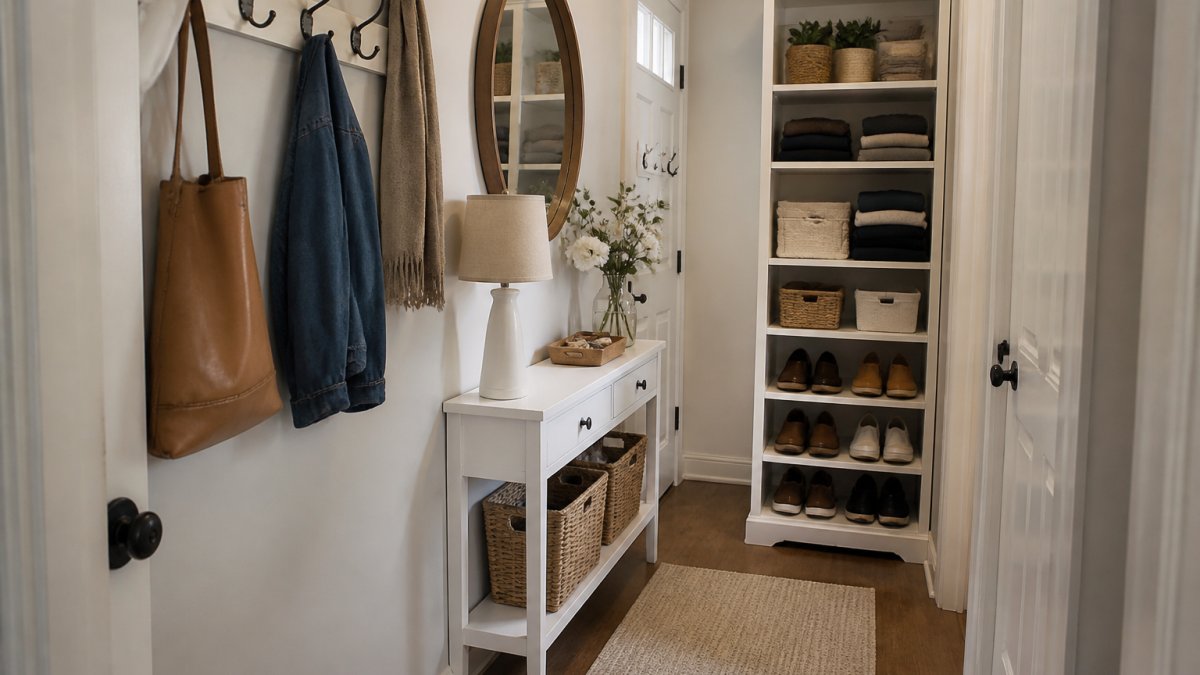
DIY Entryway Organizer: Budget-Friendly Ideas You Can Build
Custom-built solutions often cost less than retail storage and fit your space perfectly. DIY entryway organizer projects use basic materials and require minimal tools. These budget-friendly ideas deliver storage that matches your exact dimensions and style.
A simple wooden shelf mounted above a doorway creates storage without consuming wall space. Crates stacked and secured together form a modular storage unit that's easy to customize. Pegboards painted to match your décor provide flexible organization that adapts as needs change. A wooden bench with storage underneath combines seating and hidden organization in one project.
The most affordable DIY entryway organizer approach starts with assessing what you actually need to store. Once you know the volume of shoes, coats, bags, and accessories, you can build or assemble storage that matches those needs exactly. Many DIY solutions use materials from hardware stores that cost significantly less than finished furniture while delivering the same functionality.
Common mistakes in DIY projects include building storage that's too large, making it difficult to fit in the space, or too small, leaving items unorganized. Measure twice, build once. Start with one functional piece before expanding your system.
Keeping Your Entryway Clutter-Free: Maintenance Routines
Organization systems only work when you maintain them. A maintenance routine prevents clutter from accumulating again and keeps your entryway functioning smoothly. Small daily habits create lasting order without requiring major effort.
A weekly 10-minute reset removes items that don't belong and returns everything to its designated spot. Shoes go in the rack, coats hang on hooks, bags sit on shelves. This brief routine prevents the slow creep of clutter that undoes good organization. Seasonal rotation removes off-season items, creating space for current needs.
The key to clutter-free entryway organization ideas is establishing a "one in, one out" rule. When a new item enters the entryway, an old item leaves. This prevents accumulation while keeping your system balanced. Family members should understand where items belong and take responsibility for returning them after use.
At Uniq Trenz, customers discover that compact, well-organized entryways reduce daily stress. When everything has a place and family members know where items belong, mornings run smoother and the home feels more welcoming. The most successful entryway organization systems combine smart furniture choices with consistent maintenance habits.
Small spaces require intentional choices, but affordable compact entryway organization ideas prove that tight dimensions don't prevent functional, attractive entries. Wall-mounted solutions, vertical furniture, and DIY projects deliver storage without breaking budgets. Paired with simple maintenance routines, these strategies transform cluttered entryways into organized, inviting spaces that work for busy households.
Frequently Asked Questions
How do you organize a small entryway on a budget?
Start with affordable wall-mounted solutions like hooks and pegboards, then add inexpensive baskets or bins for daily essentials. Use vertical space to avoid floor clutter. Repurpose items you already own, old shelves, crates, or ladder racks work as storage. Focus on the items you actually use daily: keys, shoes, coats, and bags. Prioritize these first, then add decorative touches. Many budget-friendly entryway organization ideas cost under $50 when you combine DIY approaches with simple, functional pieces.
What can I use for entryway storage if I don't have a closet?
Wall hooks are the fastest solution for coats and bags. Floating shelves provide storage without floor space. Slim console tables offer surface area for keys and mail while storing items underneath. Over-the-door organizers and pegboards maximize unused wall space. Benches with hidden storage combine seating and organization. Corner shelving units fit tight spaces. Baskets and bins under a bench hide clutter while keeping essentials accessible. Renter-friendly options include adhesive hooks and freestanding furniture that require no installation.
How can renters add entryway storage without drilling holes?
Adhesive hooks and damage-free wall strips hold coats and bags securely without drilling. Freestanding shelving units and slim furniture need no installation. Over-the-door organizers hang on existing doors. Tension rods between walls create hanging space for coats. Leaning shelves and ladder racks stand independently. Storage benches and ottomans provide seating plus hidden storage. Command strips support lightweight shelves and organizers. These renter-friendly options let you organize your entryway fully without landlord concerns or security deposit issues.
What should you keep by the front door?
Store only everyday essentials within arm's reach: keys, shoes you wear regularly, coats and jackets, bags and backpacks, umbrellas, and sunglasses. Keep a small tray or dish for loose items like mail and packages. A basket holds scarves, gloves, or seasonal accessories. Avoid storing items you use weekly or less frequently elsewhere. This selective approach keeps your entryway functional and prevents clutter from spreading. Rotate seasonal items in and out quarterly to maintain organization and reduce visual chaos.